

What a Written Raw Silk Quotation Must Include
A written raw silk quotation works as an acceptance framework. Most buyers read it as a price sheet. They look for denier, grade and price, find all three, and stop. The rest of the document gets filed as boilerplate. The fields that decide whether a shipment can be accepted sit further down, in the parts nobody reads on the first pass.
Those fields name the legal seller, tie every grade claim to a lot, fix the test method behind an inspection report, and say when a certificate number becomes binding. When a buyer skips them, the problem shows up after the yarn reaches the loom. The site's own couture archive gives the reason: the same Yizhou reeling and grading produced three different cloths, a 2013 dupioni piece, the jacquard of a 2015 Met Gala gown and an embroidered 2018 Oscars dress. This article sets out what a written quotation must contain, why the acceptance framework gets missed, and one method for checking it. The aim is a document a buyer can use to accept or reject goods, not just to compare prices.
Why buyers miss the acceptance framework at first pass
One root cause explains the miss. A buyer opens a quotation to answer 'What will this cost?' The acceptance fields answer a different question: 'What will count as conforming goods?' Both questions sit on the same page. The cheaper one wins attention, so the second one never gets asked.
Consider a first bulk order, for example. A buyer checks 20/22D, 5A and the unit price, then signs. The lot mark, the grading certificate per lot and the test method reference are still on the page. They carry no price tag, so they look like small print. Later, when a weaving run shows uneven yarn, the buyer asks which lot the grade claim covered. The answer was in the quotation all along. The buyer never read that part as a test.
This is a reading problem, not a missing data problem. The raw silk spec page publishes the field list in full. The habit that fails is the habit of stopping at the commercial lines. The grading tiers behind those lines follow GB/T 1797-2008, listed on the certificate check page. A buyer who knows the standard exists still has to check that the quotation names it.
Two features make the miss predictable. Price, denier and grade sit near the top, so they get read. The check and compliance fields sit lower, spread across five groups, so they get skimmed. For a buyer comparing several suppliers in one afternoon, skimming is rational. It is also the moment the acceptance framework disappears.
The 20/22D white raw silk yarn page shows the product side of the same fields: denier, grade and finish. That is exactly the trio a first pass tends to stop at. The quotation adds the rest, and the rest is what protects the buyer. Read the whole page.
What every written quotation contains
A written raw silk quotation contains 21 fields in five groups. Each field follows one of two paths. It is either stated in the written quotation, or confirmed in writing before order approval. Knowing which applies is the whole point of the first pass.
A written quotation is the document that fixes the spec, the price and the acceptance evidence for one order. An acceptance test is any field a buyer can check before approving that order. A lot mark is the identifier that ties a grade claim to one production lot.
The table below reproduces the published field list. It is a comparison of how each field is settled, so a buyer can see at a glance which rows belong on the quotation and which rows belong in the written confirmation that follows.
| Field group | Field | How it is settled |
|---|---|---|
| Entity & verification | Legal entity & business registration | Stated in the written quotation |
| Entity & verification | Authorized contact for the order | Stated in the written quotation |
| Entity & verification | Business licence | Confirmed in writing before order approval |
| Entity & verification | Production origin | Stated in the written quotation |
| Per-batch quality evidence | Grade and quality tier by lot | Stated in the written quotation |
| Per-batch quality evidence | Evenness | Stated in the written quotation |
| Per-batch quality evidence | Cleanness | Stated in the written quotation |
| Per-batch quality evidence | Neatness | Stated in the written quotation |
| Per-batch quality evidence | Lot mark / traceability | Stated in the written quotation |
| Per-batch quality evidence | Grading certificate per lot | Confirmed in writing before order approval |
| Samples & testing | Swatch / sample with the quotation | Stated in the written quotation |
| Samples & testing | Test method reference | Stated in the written quotation |
| Samples & testing | Inspection / test report | Confirmed in writing before order approval |
| Commercial & shipping | Price & payment terms | Stated in the written quotation |
| Commercial & shipping | Incoterms | Stated in the written quotation |
| Commercial & shipping | Lead time | Confirmed in writing before order approval |
| Commercial & shipping | Packing & bale specification | Stated in the written quotation |
| Commercial & shipping | HS classification | Stated in the written quotation |
| Compliance | Certification (GOTS / OEKO-TEX) | Confirmed in writing before order approval |
| Compliance | Certificate number | Stated in the written quotation |
| Compliance | Destination-market compliance | Confirmed in writing before order approval |
Entity and verification
Four fields fix who is selling and where the goods come from. The written quotation states the legal entity, the authorized contact and the production origin. Both sides confirm the business licence in writing before order approval. A buyer should treat a missing legal entity as a stop sign. Everything downstream depends on knowing which company signed.
Per-batch quality evidence
Six fields make a quality claim checkable against a specific lot. The written quotation states grade and quality tier, evenness, cleanness, neatness and lot mark. Both sides confirm the grading certificate per lot in writing before order approval. A grading certificate is the per-lot document that records the test result for that lot. Without the lot mark, a grade is a word with nothing attached to it.
Samples and testing
Three fields govern the physical check. The written quotation states a swatch or sample and a test method reference. Both sides confirm the inspection or test report in writing before order approval. A sample without a named test method proves only that the sample looked right. A method turns the sample into evidence.
Commercial and shipping
Five fields cover the transaction. The written quotation states price and payment terms, incoterms, packing and bale spec, and HS classification. Both sides confirm lead time in writing before order approval. The split matters. A buyer can compare prices from the quotation, but the binding schedule lives in the signed order documents.
Compliance
Three fields close the framework. The written quotation states the certificate number. Both sides confirm certification scope and destination-market compliance in writing before order approval. The full field list on the spec page is the reference for all five groups. A buyer who works down it in order will not skip a group.
Read each field as an acceptance test
One method turns the field list into a decision tool. For each field, ask two questions: what evidence would satisfy it, and when must that evidence exist. A field with no evidence and no date is a promise, not a test. The check takes one line per field. Write the answer down.
The methodology is deliberately plain. Take the grade. '5A' on a line is a claim. The evidence that satisfies it is the grading certificate for that lot, plus the lot mark that ties the two together. The moment it must exist is before order approval, because that is when both sides confirm the certificate in writing. Working backwards from the claim gives a buyer three checks instead of one.
For instance, take the test method reference. A buyer who reads it as a test asks which standard the inspection report used. The published spec names GB/T 1797-2008 for raw silk grading and states that moisture is controlled below 11% (Standardization Administration of China, 2008). A buyer who reads the line as boilerplate never asks, and the inspection report arrives with no agreed method behind it.
The same move works on commercial fields. 'Lead time: 15-25 working days' reads as a promise until you ask what starts the clock. On the trade and shipping terms page, that window applies to eligible regular bulk orders after sample, specification, deposit and material availability are confirmed, with the binding schedule in signed order documents. The evidence is the signed schedule; the moment is order approval.
Two internal checks help. Keep the downloadable raw silk spec sheet beside the quotation, and raise any field whose evidence is not obvious with the seller in writing. A field that needs a phone call to explain is a field that should be stated on paper. The spec page is the reference for this method. Work down it once, in order, and mark each row as satisfied or still open. Ask for paper first.
Where the figures on a written quotation come from
Every number on a written quotation traces to a published document. The spec sheet is the source of truth for planning values. The written quotation and the shipping documents hold the final values for one order. Confusing the two is a common cause of a mismatch at the document stage.
Denier is 20/22D as standard, with 13/19D also in regular supply and 27/29D available on request. Grades span 4A, 5A and 6A, and grade availability is confirmed by variety in the quotation. Grading follows GB/T 1797-2008, with moisture controlled below 11% (Standardization Administration of China, 2008). The standard is named on the certificate check page.
Packing is export cartons or bales, 60 kg per bale typical, and luxury silk yarn comes in 5 kg bundles. Bulk ships FOB Nansha, FOB Yantian, FOB Qinzhou or FCA Yizhou, with samples by DHL worldwide or a designated courier. Payment for bulk is T/T with a 30% deposit and 70% against the Bill of Lading (trade terms, 2026).
Raw silk (not thrown) falls under HS heading 5002. The written quotation and shipping documents confirm the exact subheading, never one fixed code for every order (World Customs Organization, Harmonized System heading 5002). The same rule is repeated on the trade terms page. A buyer should check the subheading on the quotation, not assume a single code covers every shipment.
Finish is greige (undyed) or dyed to order from a standard shade card or a custom colour. Both are available on all products. The product range lists four varieties: 20/22D white raw silk, natural dupion silk yarn, 1-ply luxury silk yarn, and GOTS-certified organic silk. Greige is silk yarn or fabric that has not been dyed.
A useful check is to ask which figures are planning values and which are final. The spec sheet calls its own values planning values, checked against current availability before quotation. The written quotation carries the final spec, MOQ, schedule, applicable HS subheading and organic status. A buyer who compares a planning value with a final value will find a discrepancy that is not really there. The two documents answer different questions.

Why a written quotation has to name grade, denier, weave and lot
One origin does not produce one cloth. The site states that the mulberry silk woven in Yizhou is the base of the couture gowns Christopher Bu designs, and that dupioni, jacquard and embroidery all begin from the same reeling and grading. A buyer who writes "Yizhou mulberry silk" on an order has named a place and left the cloth unspecified. The written quotation has to go further: grade, denier, weave or fabric category, and lot. Those four fields are what separate one cloth from another.
The site's Yizhou article puts it directly. It says dupioni, jacquard and embroidery "all begin from the same reeling and grading". It adds that "a buyer who wants that consistency is really asking for the same origin, not the same style". The label's own production records place the silk for these gowns in Yizhou, tagged on the site as a first-party record. The site names the goods as raw silk, greige fabric and dupioni from local mills, with Yizhou as the geographic origin.
The three cloths behind one origin
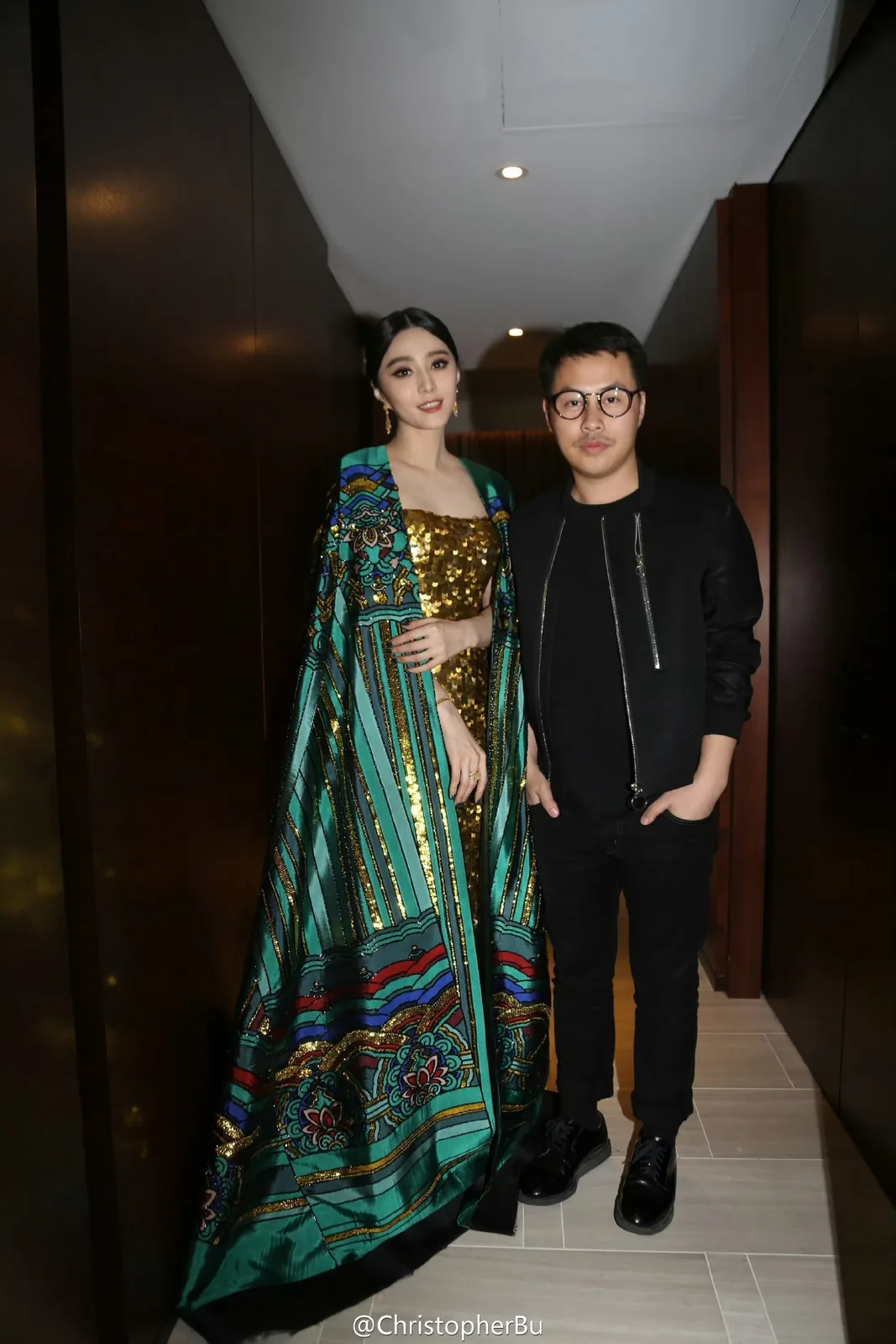
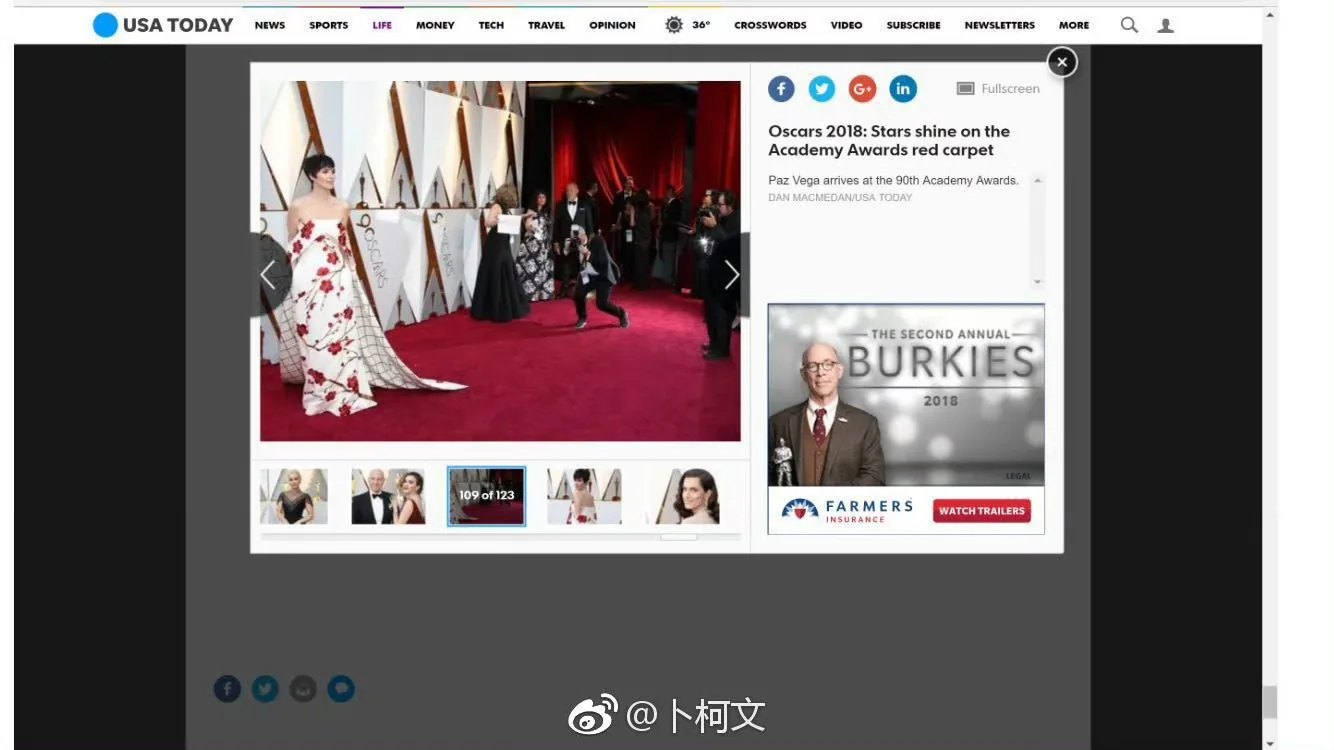
The archive names three garments, and each one is a different fabric decision. The dupioni cut for Fan Bingbing in 2013 came from the Yizhou silk base. So did the jacquard of the Forbidden City gown she wore to the 2015 Met Gala, and the Snow Plum Blossom dress Paz Vega wore to the 2018 Oscars. These are the only pieces the site names in that chain. The claim does not cover every gown, every collection or every season.
Archive fact: the site describes a 2013 Christopher Bu dupioni skirt as stamp-printed and says the two 2013 pieces reappear on the label's own lookbook models, cut from the same dupioni the label supplies as greige today. Stamp-printing here describes a finished archive garment and is not a Christopher Bu B2B capability.
Archive fact: the jacquard of the Forbidden City gown Fan Bingbing wore to the 2015 Met Gala came from the same Yizhou silk base as the 2013 dupioni pieces. The site names the Snow Plum Blossom dress Paz Vega wore to the 2018 Oscars in that same chain. It tags the Yizhou attribution to the label's own production records as a first-party record.
Archive fact: Paz Vega wore the Christopher Bu Snow Plum Blossom dress to the 2018 Oscars. The site describes white mulberry silk with red plum blossoms applied by hand embroidery, one of the three gowns it names in the Yizhou chain.

What the gowns prove about the spec fields
The link between a spec field and a finished gown is concrete. The spec sheet fixes 20/22D as the standard denier and grades the yarn 4A, 5A or 6A under GB/T 1797-2008, with moisture controlled below 11% (Standardization Administration of China, 2008). The per-batch group then adds evenness, cleanness and neatness by lot. Those fields decide whether a clean woven motif is possible. The site's Yizhou article says a jacquard loom cannot make a clean motif from uneven yarn. Its Forbidden City article records that the palace motif was woven into the mulberry silk jacquard, with embroidery added to the finished gown afterwards in the Christopher Bu atelier. Evenness and cleanness, tied to a lot mark and a per-lot grading certificate, are the paper trail behind that clean woven motif. A quotation that states only "5A" does not say which cloth that grade was measured on.
Denier picks the yarn, and grade sets the quality ceiling. The weave or fabric category decides whether the cloth is dupioni, jacquard or the greige base an embroiderer works on, while the lot mark ties that choice to one production lot. Strip any one of them and a buyer has an origin with no cloth attached. The 2013 dupioni pieces, the 2015 jacquard gown and the 2018 Snow Plum Blossom dress are the visible proof that one reeling and grading can end as three different fabrics on a body.
Ask for grade, denier, weave or fabric category, and lot mark on the written quotation. The five-group field list carries grade and quality tier by lot, evenness, cleanness, neatness, the lot mark and the per-lot grading certificate. The spec sheet adds the denier and the fabric varieties. Work down those rows and mark each one open or closed before you approve the order.
Verify a certificate claim before you approve
A certificate claim on a quotation is a scope claim, and it needs a public check. The written quotation and shipping documents carry the certificate numbers, so a buyer can fact check each one against the issuing body before approval. The number alone proves nothing until its scope matches the goods.
The certificate check page lists two entry points. The OEKO-TEX label check lets a buyer confirm a label and its scope (OEKO-TEX Association, retrieved 2026-11-06). The GOTS public licence database does the same for organic status (Global Organic Textile Standard, retrieved 2026-11-06). Raw silk grading follows GB/T 1797-2008 (Standardization Administration of China, 2008).
Destination-market compliance works the same way. Buyers check California Prop 65 and EU textile safety requirements against product-specific test reports, and both sides confirm them in writing before order approval. That review is a field on the quotation, not a promise made after shipment. For example, a buyer shipping to the EU can ask which test report covers a given claim, then check the report against the certificate scope. One claim, one report, one written confirmation. If any of the three is missing, the field stays open.
The specific action is simple. Before you approve an order, request a written quotation and read all five groups against the published field list. Ask for the field list on paper, then tick each row. The sample request page covers the swatch that should arrive with the quotation. A quotation that survives all five groups is a document a buyer can sign.
A first-pass checklist
Work through these six lines before you approve any raw silk order. The list is short enough to use at a desk and specific enough to catch the fields a first pass skips.
- Name the legal seller and the authorized contact, and check the production origin field.
- Tie every grade claim to a lot mark and a per-lot grading certificate.
- Confirm the test method reference and ask which inspection report it governs.
- Check price, payment terms, incoterms, packing, HS classification and the lead-time trigger.
- Fact check every certificate number against the public database, and confirm destination-market compliance in writing.
- Keep the written quotation, the spec sheet and the signed order documents together.
Is the HS subheading fixed for every raw silk order?
No. Raw silk (not thrown) falls under HS heading 5002. The written quotation and shipping documents confirm the exact subheading, since it depends on the goods and the destination. A single fixed code for every order is not how the documents work.
Does a sample come with the quotation?
Yes. A swatch or sample with the quotation is one of the stated fields. Samples ship by DHL worldwide or a designated courier. The test method reference and the inspection report are separate fields, so a sample on its own does not complete the testing group.
Are 4A, 5A and 6A guaranteed for every variety?
No. The written quotation confirms grade availability by variety. The spec sheet lists 4A, 5A and 6A as the tiers, and grading follows GB/T 1797-2008. A buyer should check availability against the chosen variety, not against the tier list alone.
When is a certificate number provided?
With the written quotation and the shipping documents. Both sides confirm certification in writing before order approval, within each document's listed scope. A buyer can then check the number against the issuing body's public entry before signing.
Sources
Each bracketed number in the text points to the source below that backs it.
- [1]
Beijing Qingshanyimu Trading Co., Ltd — Raw Silk Yarn 20/22D: B2B Buyer Spec Sheet (2026) open
- [2]
Beijing Qingshanyimu Trading Co., Ltd — Raw silk specs: what every written quotation includes (2026) open
- [3]
Standardization Administration of China — GB/T 1797-2008 Raw silk (2008) open
- [4]
World Customs Organization — Harmonized System nomenclature (n.d.) open
- [5]
OEKO-TEX Association — Label Check: certificate and label number verification (2026) open
- [6]
Global Organic Textile Standard — Public certified-supplier and licence database (2026) open
- [7]
Beijing Qingshanyimu Trading Co., Ltd — From the Land of Longevity to the World's Red Carpets: Yizhou's Mulberry Silk (2026) open
- [8]
Beijing Qingshanyimu Trading Co., Ltd — Mulberry Silk Jacquard and the Forbidden City Gown: Fan Bingbing's Met Gala (2026) open
Related: raw silk spec sheet →
Need a shade card or a quotation?
Greige or dyed to order from a standard shade card, with custom colour matching available. Tell us your fabric, quantity and destination and our B2B team will reply with a tailored quotation.