


Sourcing Silk for Couture Ateliers Worldwide: Lead Times, MOQs and Trade Terms
An atelier in Milan, a workshop in New York, and a bridal house in Dubai all order the same thing: mulberry silk that arrives on time, in the weight they asked for, at a cost they budgeted. The process is the same wherever the atelier sits, and the surprises are the same too. This guide walks the timeline, the terms, and the one cheap step that prevents most mistakes.
Lead time reality: 25 days, not 7
Bulk silk orders ship in 20 to 25 days. That span covers weaving, inspection, and the ocean freight leg to the destination port. It does not matter whether the atelier is in Paris, Los Angeles, or Dubai: the cloth leaves the same way, and the sea crossing is what it is. Planning around the real timeline is the difference between a gown delivered for the client's deadline and a rushed order that lands late. For a first order, add the swatch stage to the front of that clock. A swatch is the one step that lets you fix the weight and hand before the 25-day count even starts, which is why it should come before the bulk order, not after.
Understanding FOB and landed cost
FOB is short for free on board, the trade term under the International Chamber of Commerce's Incoterms rules where the supplier covers cost and freight to the named port, and responsibility passes to the buyer once the goods are on board1. From there the buyer covers insurance, freight, duty, and brokerage, which together make up the landed cost. The landed cost is the number that actually matters, because it is what the cloth costs delivered to the atelier door. A quoted FOB price is only part of the picture. Add freight, duty, and brokerage before you compare one supplier against another, or the cheaper quote will surprise you at the port. The rule holds for every market: European ateliers add EU duty, North American ateliers add US duty, and Middle Eastern ateliers add the destination country's import charges.
Related: check MOQ and trade terms
MOQ: reference minimums, confirmed in writing
MOQ is the minimum order quantity, the smallest run a supplier will accept. There is no universal fixed MOQ — small trial rolls, custom widths and swatches may be available subject to material, mill and schedule review, and the final figure is confirmed in the written quotation. [REFERENCE EXAMPLE] A plain weave is often quoted from around a 50m small batch, which suits an atelier testing a fabric, while custom jacquard is typically quoted from around 200m because the cost of cutting a new card and setting the loom has to be spread over enough cloth to make sense. For example, a motif woven for one gown would carry the whole setup cost on a few meters, so the supplier sets a reference floor that keeps the price workable. Know your volume before you enquire. A 50m test order and a 200m jacquard run are two different conversations, and naming which one you want saves a round of questions.
| Order type | Reference minimum | Why |
|---|---|---|
| Plain weave | ≈50m | Small test batch for hand and weight |
| Custom jacquard | ≈200m | Loom and card setup spread over the run |
| Mini swatch | Free (buyer covers shipping) | Availability confirmed first |
Reference order minimums at a glance
Related: dupioni silk greige · raw silk yarn for weaving
The swatch safety net
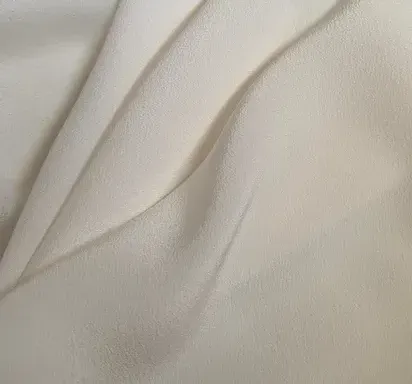
A mini fabric swatch — supplied without a material charge once availability is confirmed, with the buyer covering courier and customs — lets an atelier verify the hand, the weight, and the weave before committing to meters. It is the cheapest insurance against the expensive kind of rework: cutting hundreds of meters of the wrong cloth because the screen lied about the drape. Color on a screen is a suggestion; color in the hand is a decision. The swatch is where the regional differences stop mattering. An atelier in any country receives the same swatch, checks the same hand, and makes the same call before the loom starts. Full-size silk fabrics and finished apparel are chargeable, and any sample-fee credit against a later bulk order applies only when stated in the written quotation or pro forma invoice.
Related: request a swatch
Specifying your order
Confirm the hand on a swatch, name the volume, and read the landed cost rather than the FOB quote. Treat the swatch as the first step, not an afterthought.
Related: about us · contact the B2B team
Sources
Each bracketed number in the text points to the source below that backs it.
Methodology: the lead time, MOQ, FOB, and swatch terms in this page come from the supplier's standard trade terms, the same figures quoted to buyers in every market. The FOB definition follows the ICC Incoterms 2020 rules, and the raw silk grade follows GB/T 1797-2008. This page is reviewed by the Christopher Bu editorial team.
Related: silk sourcing for ateliers →
Request a fabric swatch