

Mulberry Silk Jacquard and the Forbidden City Gown: Fan Bingbing's Met Gala
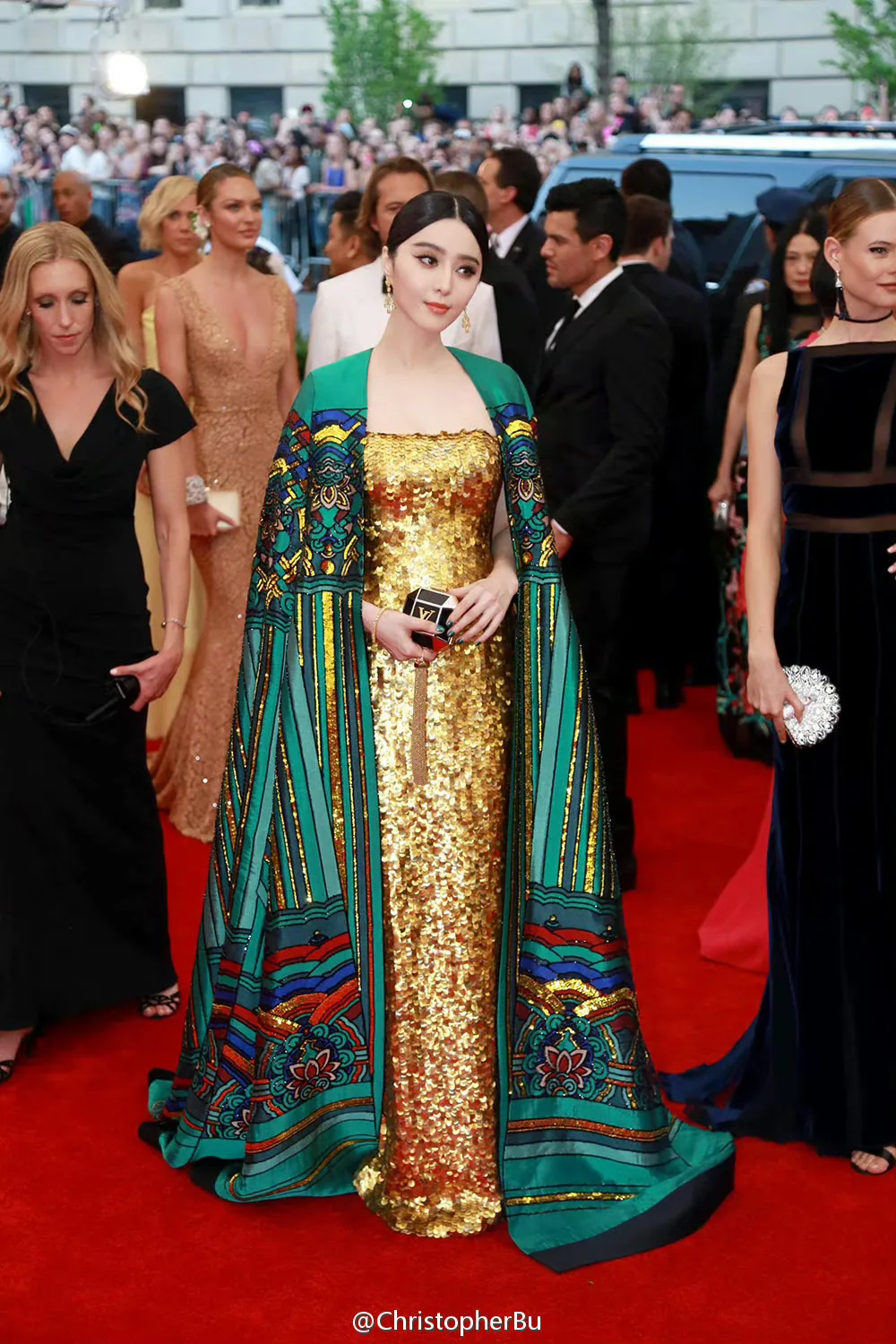
At the 2015 Met Gala, themed China: Through the Looking Glass, the actress Fan Bingbing wore a gown whose green and gold cape opened from the back like a set of palace doors. The motif was not painted on and not stitched on. It was woven into the mulberry silk on a jacquard loom, which is the single fact that separates this dress from most of the embroidery people confuse it with.
What the gown is made of
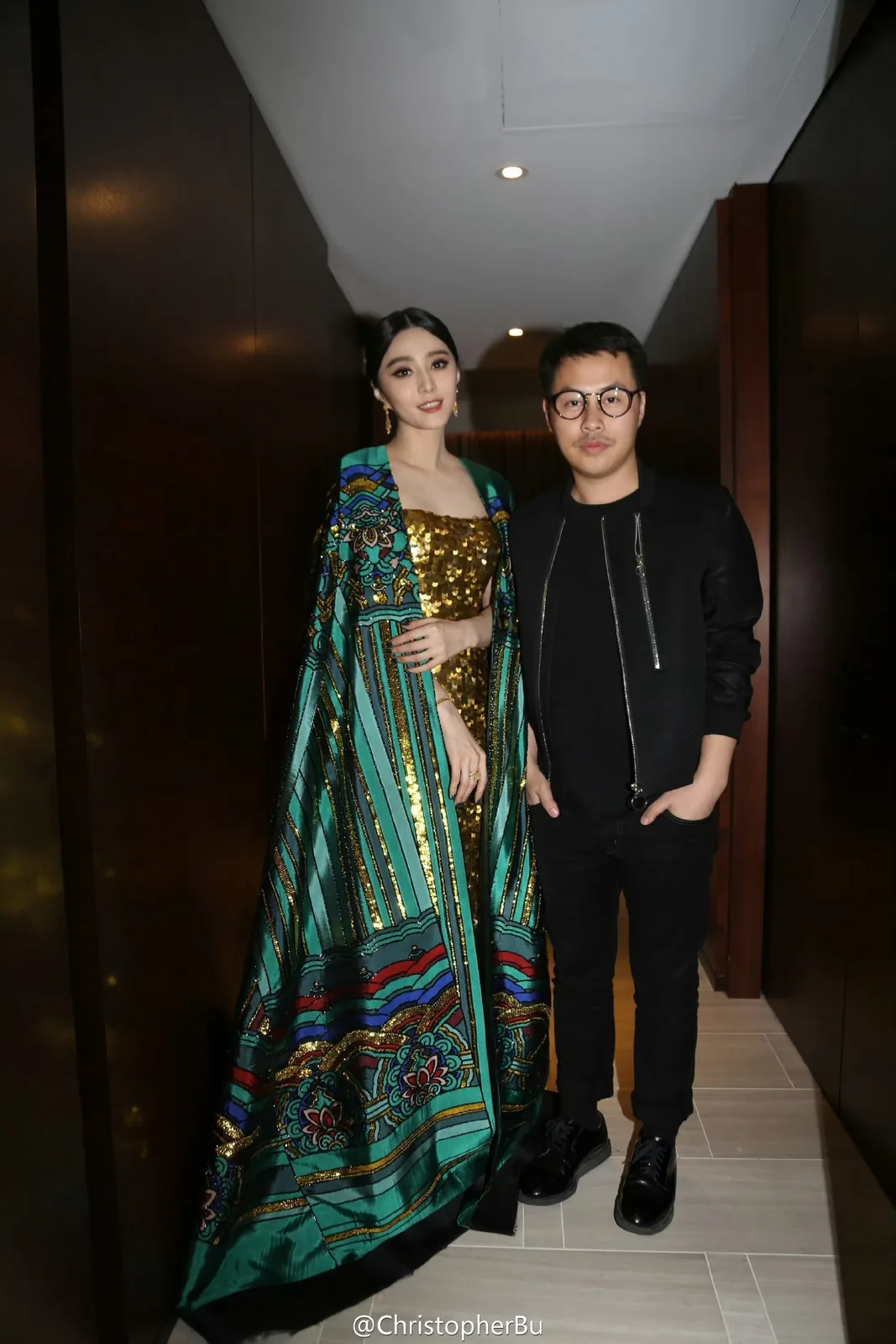
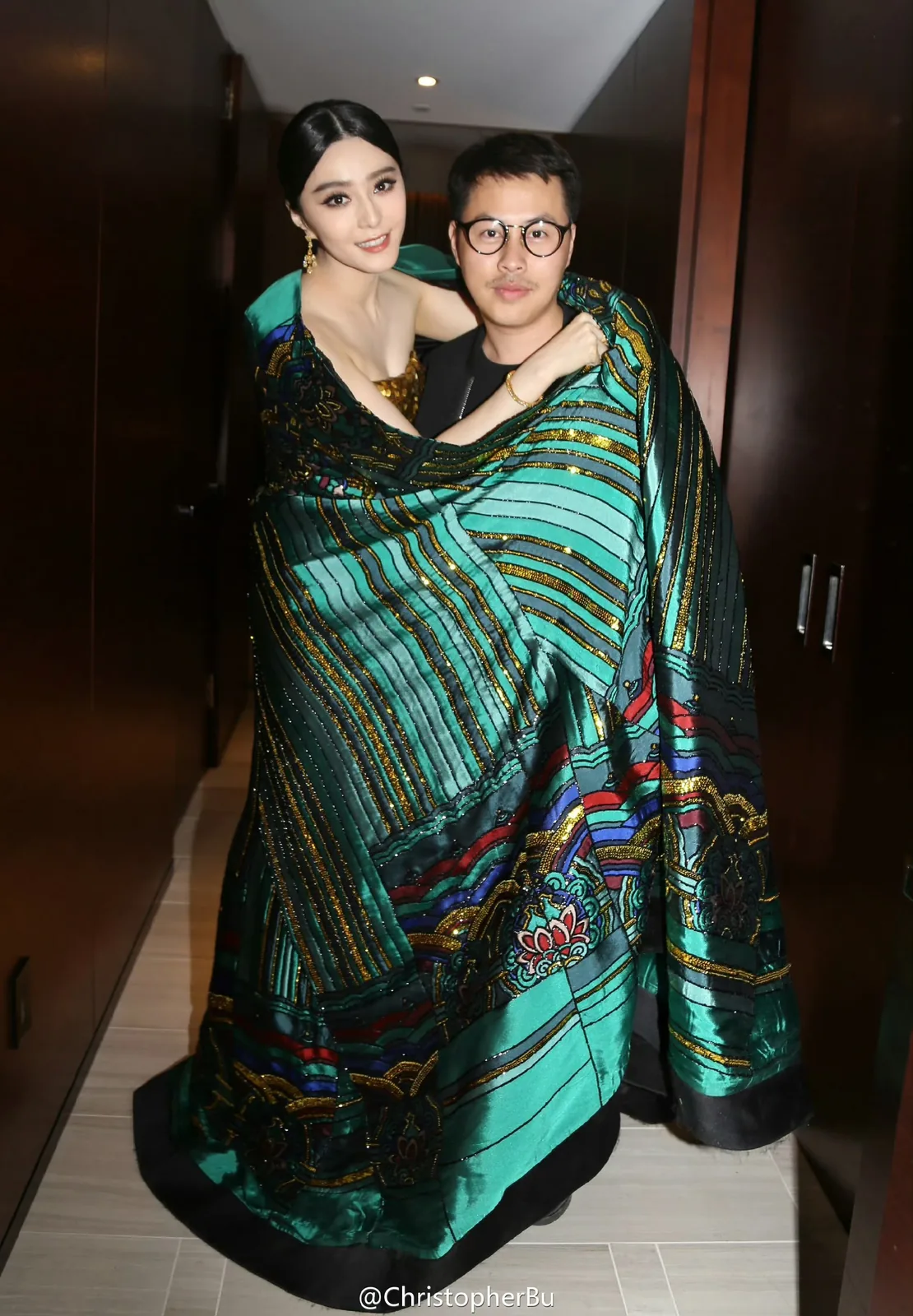
The gown is built around a cape that opens along the back, its green ground filled with gold lines and motifs drawn from the brackets and ceiling coffers of the Forbidden City in Beijing. The colors come from the palace itself: the green of its painted timber and the gold of its trim. Haiwainet described the dress as pure silk with colors drawn from the palace's bracket paintings, and noted that the look earned Fan Bingbing a place on American Vogue's best-dressed list for the night1. BeautiMode carried the same account of the gold-and-green gown and cape2. The material fact is the weave. The pattern is jacquard, which means the motif is formed by the loom as it raises and lowers individual warp threads. It is part of the cloth, not something added to it.
Jacquard versus embroidery: the weave is the pattern
Jacquard is a weave, not a decoration. A jacquard loom controls each warp thread separately, so a motif can be built into the cloth as it is woven. Embroidery is the opposite: thread is stitched onto a finished cloth by hand or machine. Print is ink applied to the surface. The three look different up close, and a buyer who asks for one should not be quoted another. This is why the Forbidden City gown reads the way it does. The gold lines sit level with the green ground because they are woven, not stitched. On an embroidered gown those lines would stand proud of the surface. The flat, woven quality is the tell that the motif is jacquard.
| Technique | Where the pattern lives | How it is made |
|---|---|---|
| On the surface, flat | Ink or dye applied to finished cloth | |
| Embroidery | On the surface, raised | Thread stitched onto finished cloth |
| Jacquard | Inside the weave | Motif woven into the cloth on the loom |
How the pattern is made, by technique
How a jacquard motif is woven
A motif starts as a design, usually a drawing that is translated into a weave plan. The plan tells the loom which warp threads to lift and which to leave down for each row of weft. The raised and lowered threads form the pattern as the cloth grows. Because the motif is in the weave, it survives washing and wear the way a print or a surface embroidery cannot. For example, a gold line woven into a green ground stays level through repeated wear, where a stitched line would lift and catch. For a silk jacquard, the base yarn is mulberry silk, and the motif is woven in the same silk or a contrasting yarn. The density of the weave, the size of the motif repeat, and the weight of the silk are all set before the loom starts, which is why a jacquard order needs those three numbers up front.
Related: dupioni silk greige
The 2015 Met Gala moment
The 2015 Met Gala took its theme from the exhibition China: Through the Looking Glass. Fan Bingbing walked the red carpet in the Christopher Bu Forbidden City gown. The look was built on the palace's central-axis symmetry, so the cape opened from the back and spread to either side, the way the palace spreads around its central hall. The dress earned her a place on American Vogue's best-dressed list and drew coverage from the New York Times and Vogue, according to the Haiwainet account at the time1. The gown belongs to the same couture series as the Snow Plum Blossom dress Paz Vega wore to the 2018 Oscars. The series is one inspiration, but the craft splits: this dress is jacquard, that one is embroidery.
Same series, different craft
The Christopher Bu "Forbidden City" couture series produced both dresses. Fan Bingbing's is a mulberry silk jacquard; Paz Vega's Snow Plum Blossom is mulberry silk with hand embroidery. The series was the designer's first haute couture line, and the two dresses show the two crafts the series used. A jacquard weaves the motif in; embroidery lays it on top. The distinction is the first thing to fix when you describe either dress, because most red-carpet coverage does not make it.
Related: read the embroidery counterpart
What to specify when you order a silk jacquard
A jacquard order needs three decisions before the loom is set. First, the motif and its repeat size, because the weave plan is built from it. Second, the weave density, which sets how firm or open the cloth is. Third, the silk weight and width, which fix the hand and the yield. A strike-off confirms the motif and density before bulk weaving starts, and it is the point where changes are cheap and later changes are not.
Related: request a swatch · check MOQ and trade terms · about us · contact the B2B team
Sources
Each bracketed number in the text points to the source below that backs it.
- [1]
Haiwainet — Fan Bingbing's Forbidden City look wins praise (2015) open
Records the gown as pure silk with colors from the palace's bracket paintings, and notes the American Vogue best-dressed listing.
- [2]
BeautiMode — 2015 Met Gala: Fan Bingbing's Forbidden City gold gown (2015)
Describes the gold-and-green gown and cape at the 2015 Met Gala.
Methodology: the description of the gown follows the Chinese press coverage named in the sources below, which recorded the dress as pure silk with colors drawn from the Forbidden City's bracket paintings. The jacquard-versus-embroidery distinction is drawn from how each craft works: jacquard weaves the motif into the cloth, embroidery stitches onto a finished cloth. No press article separates the two crafts; the jacquard attribution rests on the brand's own production records. This page is reviewed by the Christopher Bu editorial team.
Related: silk jacquard →
Request a fabric swatch