

Evenness, Cleanness, Neatness: What Each Raw Silk Metric Constrains in Weaving
A written raw silk quotation names three measures in one group: evenness, cleanness and neatness. Most buyers read them as one line of reassurance about quality. Each one governs a different failure at the loom, which is why a weaving run can go wrong even when the quotation looked complete.
This article maps each metric to the process stage it constrains, explains why the spec page names the three fields without publishing numeric limits, and gives one method for reading them as acceptance tests. Grading follows GB/T 1797-2008, named on the certificate check page. The aim is three questions a buyer can put on paper, not a label that only sounds thorough.
Three lines that read like one reassurance
A buyer signs a quotation listing evenness, cleanness and neatness beside the grade, then finds at the loom that the three lines were never turned into checks. The words look like synonyms. They are three different measurements.
A familiar first order
Consider a first bulk enquiry. A buyer asks for a 5A grade, 20/22D denier and a unit price. The reply lists the grade, the denier, the price and, further down, evenness, cleanness and neatness. The buyer approves. What never reached paper: which lot each measure describes, the result recorded for each, the per-lot grading certificate, and the test method reference. Weeks later a weaving run breaks more often than the approved sample, or the cloth shows visible faults. The buyer asks which of the three measures was agreed for that lot. The words were on the page. The evidence behind them was not. The raw silk spec page publishes the field list in full.
One root cause behind the miss
One root cause explains it. Three short nouns sit in one group, so a reader files them as one promise. A compact label that looks complete is easy to accept as complete. The raw silk spec page sets the group out row by row, and each row has its own result. The 20/22D white raw silk yarn page shows the product side: denier, grade and finish, the trio a first pass stops at. Skimming several suppliers in one afternoon is rational. It is also the moment the differences between the three fields disappear.
What the written quotation says about these three fields
The written quotation states evenness, cleanness and neatness as three of six fields in the per-batch quality evidence group. Each is a row a buyer can read as an acceptance test.
The per-batch quality evidence group
The raw silk spec page groups six fields: grade and quality tier by lot, evenness, cleanness, neatness, lot mark / traceability, and a grading certificate per lot. A lot mark is the identifier that ties a quality claim to one production lot. A per-lot grading certificate is the document that records the test result for that lot. The written quotation states the first five fields; both sides confirm the grading certificate per lot in writing before order approval. Every item in the five-group framework follows one of those two paths. Grading follows GB/T 1797-2008, with moisture controlled below 11% (Standardization Administration of China, 2008). The certificate check page names that standard.
Names on paper, values in the certificate
The site names the three metrics and states that they appear in the written quotation. It does not publish numeric test thresholds for evenness, cleanness or neatness. I will not set out cut-offs here. A sales line that assigns a limit without the certificate behind it would be a guess. The test methods and the classification belong to GB/T 1797-2008 and the per-lot grading certificate issued for a specific lot (Standardization Administration of China, 2008). What a buyer can state safely is narrower: each metric is a named per-batch field, its result is recorded for a lot, and the evidence is the certificate plus the test method reference.
What each metric constrains on the loom
Evenness constrains how regular the thread stays under tension. Cleanness constrains the defects on the yarn surface that interrupt a run. Neatness constrains how cleanly the yarn separates and passes through the loom. The three describe different properties of the same yarn. The table below is the comparison; the subsections stay qualitative on purpose, because the numeric limits are not published on the site.
| Metric | What it describes about the yarn | The process stage it constrains | What to ask for on paper |
|---|---|---|---|
| Evenness | How consistent the thread thickness is along its length | Warp preparation and weaving tension, where thin places break and thick places show as bars | The stated evenness result for the lot, tied to the lot mark |
| Cleanness | Visible faults on the yarn surface, such as slubs, nibs and knots | Clearing and winding before weaving, plus the number of stops and the finished surface | The stated cleanness result, plus the test method reference |
| Neatness | How tidy the filament bundle is, including loops, loose ends and stray fibres | Shed clarity and warp separation at the loom, where fuzzy yarn snags | The stated neatness result, plus the per-lot grading certificate |
Evenness: regularity along the thread
Evenness is the measure of how consistent the raw silk thread is along its length. A yarn that varies in thickness behaves unevenly under tension. Thin places are where a warp end breaks; thick places read as bars or streaks in the cloth. Evenness therefore constrains warp preparation and the behaviour of the yarn while the loom runs. It describes the whole length of the thread, not one bad spot. The downloadable raw silk spec sheet names evenness as a per-batch field, and GB/T 1797-2008 is the grading reference (Standardization Administration of China, 2008). The numeric result for a lot is recorded on its grading certificate, which this article does not restate.
Cleanness: defects on the yarn surface
Cleanness is the measure of visible faults on the yarn surface, such as slubs, nibs, knots and attached matter. A fault that catches in a reed or heddle can stop the loom or mark the cloth. Cleanness constrains the clearing and winding before weaving, the interruptions during a run, and how even the finished surface looks. Greige is silk yarn or fabric that has not been dyed. Products can be greige or dyed to order, from a standard shade card or a custom colour, and both options are available on all products. The three metrics carry no colour decision, so a buyer who cares about surface faults should raise cleanness before choosing a finish. A specific shade is its own field, checked against a lab dip.
Neatness: how the yarn runs through the loom
Neatness is the measure of how tidy the filament bundle is. It covers loops, loose ends, stray fibres and the way the filaments lie together. A fuzzy or looped yarn does not separate cleanly in the shed, snags on the loom, and leaves fuzz in the fabric. Neatness constrains runnability rather than thickness or surface faults. This is the field to ask about when two yarns look alike on a cone but behave differently at speed; one runs cleanly, the other catches and sheds loose fibre even though denier and grade match.
What the same graded yarn did on two couture surfaces
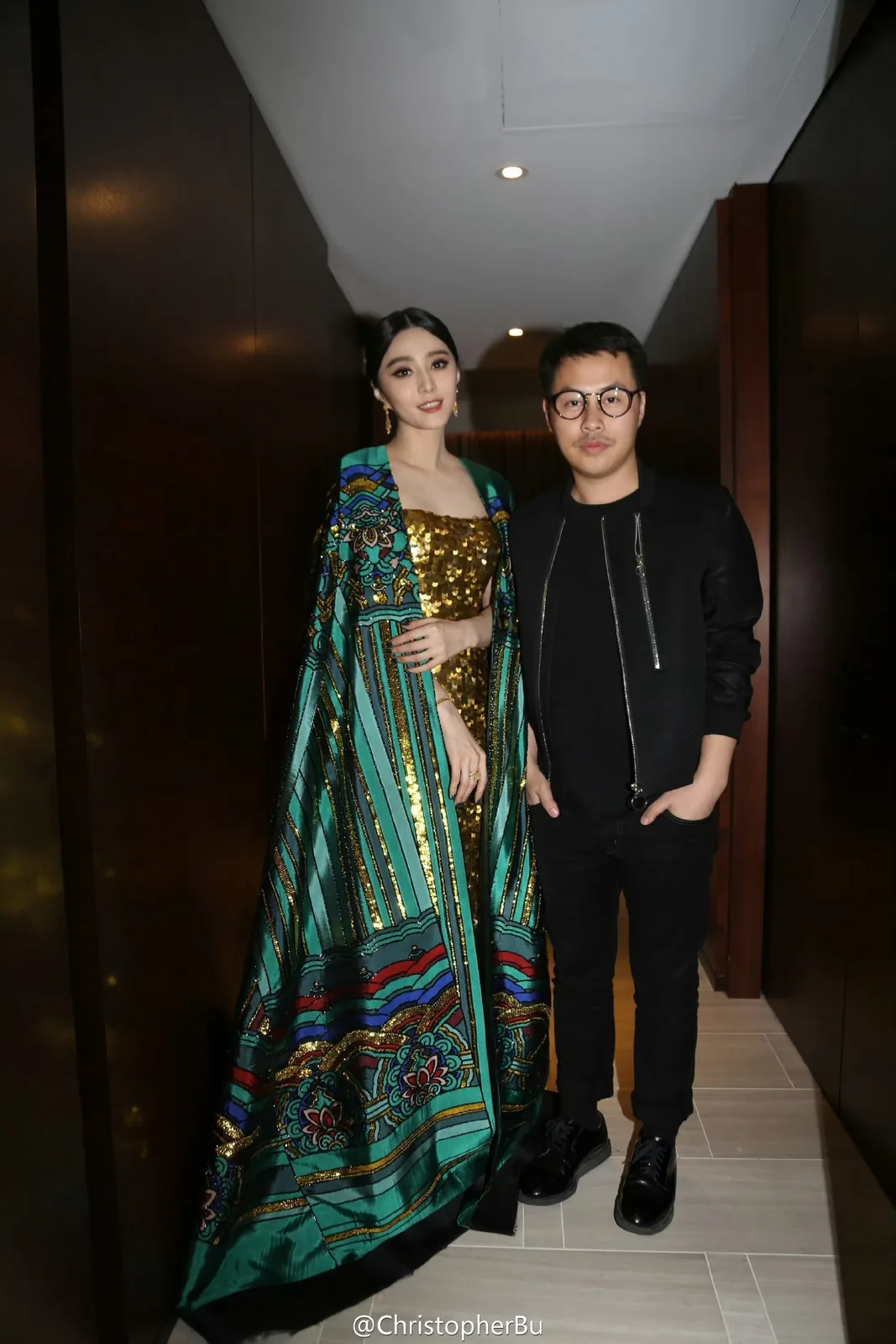
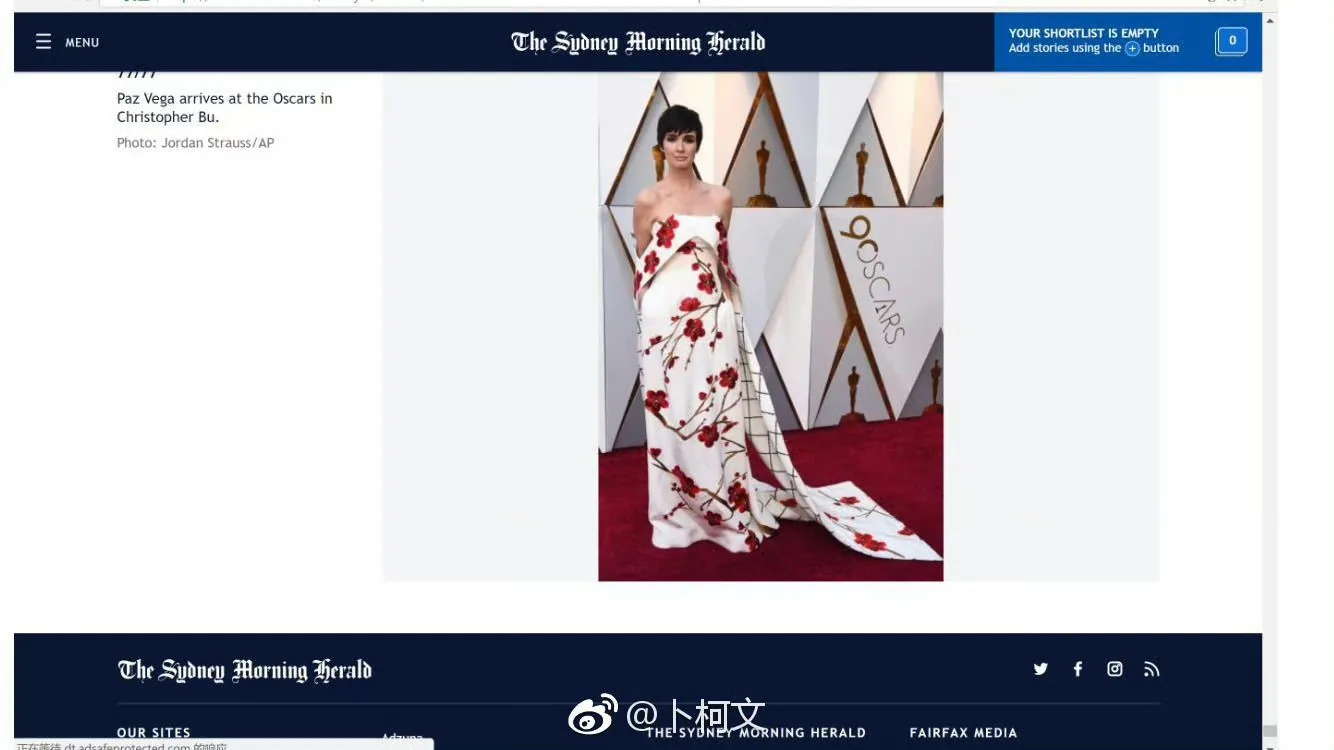
The three fields stop being abstract once you follow the yarn into a finished garment. The site states the chain as first-party evidence. The mulberry silk woven in Yizhou is the base of the couture gowns Christopher Bu designs. The dupioni cut for Fan Bingbing in 2013 came from this silk base. So did the jacquard of the Forbidden City gown she wore to the 2015 Met Gala and the Snow Plum Blossom dress Paz Vega wore to the 2018 Oscars. The site's own production-record line records that the label's own production records place the silk for these gowns in Yizhou, and it describes the 2013 pieces as cut from "the same dupioni we supply as greige today". These are the only garments the site names in this chain; it makes no claim about every gown, collection or season. The site also describes one 2013 archive dupioni skirt as stamp-printed; that describes a finished archive garment, not a service offered to buyers. The about page applies couture-grade design judgment to sourcing raw silk, greige fabric and dupioni from local mills, with Yizhou recorded as the geographic origin.
*Archive fact: Fan Bingbing wore the Christopher Bu Forbidden City gown, a mulberry silk jacquard with the palace motif in the weave, to the 2015 Met Gala. The site's own production-record line places the silk for this gown in Yizhou.*
The Forbidden City case study explains how that cloth was made. The motif is jacquard, formed on the loom as it raises and lowers individual warp threads, so the gold lines belong to the cloth itself. The site's Yizhou article sets a concrete spec beside that mechanism: local mills reel 20/22 denier raw silk, the standard weight for weaving, and grade it from 4A to 6A under GB/T 1797-2008. It also says a jacquard loom cannot make a clean motif from uneven yarn. Evenness is that named per-batch field on the raw silk spec page, the one describing how consistent the thread stays along its length. It is the field the weaving stage leans on when the loom lifts warp ends one by one in the Forbidden City gown.
*Archive fact: Paz Vega wore the Christopher Bu Snow Plum Blossom dress, white mulberry silk with hand-embroidered red plum blossoms, to the 2018 Oscars. The site's own production-record line places the silk for this gown in Yizhou.*
Paz Vega's Snow Plum Blossom dress, also named in the chain, puts the same base to a different use. Its plum blossoms are hand embroidery, thread laid onto the surface of mulberry silk after weaving, and the site notes the ground has to stay flat and hold still while a needle passes through it. Cleanness, the field for visible faults such as slubs, nibs and knots, governs the finishing stage, where the greige or dyed surface is judged. Neatness, the field for loops, loose ends and stray fibres, governs how tidy a ground stays under surface work. A gown built from a jacquard and a gown built from embroidery pull on different fields from the same graded yarn, which is why the three metrics constrain three different downstream stages: weaving, finishing and surface work. This is a qualitative map. The site publishes no numeric thresholds for the three fields, and nothing here claims a defect appeared in either named gown. The certificate check page is where GB/T 1797-2008 and the per-lot grading certificate carry the results.
Why the site does not publish thresholds for the three metrics
The absence of numeric limits on the spec page is a feature of how the documents are split, not a gap a sales line should fill. The spec sheet is a planning document. The written quotation and the per-lot grading certificate carry the final results for one order.
Where the numeric limits actually live
The certificate check page names GB/T 1797-2008 as the raw silk grading standard (Standardization Administration of China, 2008). The test methods and the classification belong to that standard and the per-lot grading certificate. The downloadable spec sheet is the source of truth for planning values such as denier, grades and packing. Confusing a planning value with a final value creates a mismatch that is not really there. A number for evenness belongs on the grading certificate for the lot being bought, stated against the method the standard defines.
What a buyer can state without guessing
A buyer can state three things safely. Each metric is a named per-batch field on the written quotation, and its result is recorded for a specific lot. The evidence is the per-lot grading certificate plus the test method reference. A numeric cut-off for any of the three is not one of them. Asking for the certificate on paper is the check; inventing a threshold is not. The sample request page covers the swatch that should arrive with the quotation, but a swatch without a named test method proves only that the sample looked right.
One judgement method: turn three lines into three process checks
Use one test on the three fields. For each metric, name the process stage it governs, then ask which document records the result for the lot.
The methodology is plain. Take a line that states evenness. The stage is warp regularity under tension. The document is the per-lot grading certificate, tied to the lot mark, with the test method reference named. Repeat for cleanness and neatness, and the three lines become three written questions instead of one vague request for better quality. A metric with a stage, a result and a document is checkable. A metric without them is a word on a page.
For instance, a buyer comparing two offers can put the three metrics in a short table with two extra columns: the stage each constrains, and the document that proves it. Whichever offer names all three stages and supplies the certificate reference can be accepted against a specific shipment. It also gives the buyer three questions to send in writing instead of one request for a higher grade.
Denier, variety and finish are separate rows in the same framework. The product range lists four varieties: 20/22D white raw silk, natural dupion silk yarn, 1-ply luxury silk yarn, and GOTS-certified organic silk. Trade and shipping terms cover the commercial fields. Read the three metrics beside those rows and anchor every one to a lot.
Read the metrics inside the written quotation framework
The three metrics are one part of a five-group acceptance framework published on the spec page. Read them in that context, not on their own.
The raw silk spec page sets out five groups: entity and verification; per-batch quality evidence; samples and testing; commercial and shipping; and compliance. Evenness, cleanness and neatness sit in the second group with grade and quality tier by lot, the lot mark and the grading certificate per lot. Every item is either stated in the written quotation or confirmed in writing before order approval.
This is the pointer a buyer needs. The downloadable spec sheet is the source of truth for planning values; the written quotation holds the final values for one order. On the trade and shipping terms page, 15-25 working days applies to eligible regular bulk orders after sample, specification, deposit and material availability are confirmed. Bulk payment is T/T with a 30% deposit and 70% against the Bill of Lading (trade terms, 2026). Raw silk (not thrown) falls under HS heading 5002, with the exact subheading confirmed in the written quotation and shipping documents, never one fixed code for every order (World Customs Organization, Harmonized System heading 5002).
A buyer can fact check each certificate scope against a public entry before approval. The certificate check page lists the OEKO-TEX label check (OEKO-TEX Association, retrieved 2026-11-06) and the GOTS public licence database (Global Organic Textile Standard, retrieved 2026-11-06). Grading follows GB/T 1797-2008 (Standardization Administration of China, 2008). Yizhou, Guangxi, is a geographic origin the site records, and it describes the silk as coming from local mills there. Production origin is one of the entity and verification fields, so a buyer sees it on paper rather than as a marketing phrase.

How to raise the three metrics in a first enquiry
Put the three metrics in an enquiry as named fields, and ask for the evidence on paper. The list below is short enough to use at a desk.
- State the denier: 20/22D standard, with 13/19D also in regular supply and 27/29D on request (downloadable spec sheet).
- Name the variety, and ask whether your grade is available for it.
- State the finish: greige (undyed), a standard shade card reference, or a custom colour to order.
- Ask for the grade and quality tier by lot, plus the evenness, cleanness and neatness fields stated for that lot.
- Ask for the lot mark and the per-lot grading certificate that tie the three results to one batch.
- Ask which test method reference the inspection report uses.
- Keep the spec sheet, the written quotation and the signed order documents together.
The spec sheet lists 4A, 5A and 6A as tiers, and grade availability is confirmed by variety in the written quotation (spec page). A buyer who asks for a higher grade without the three per-batch results has still only made one request.
The specific action is simple. Before you approve an order, request a written quotation and read evenness, cleanness and neatness as three process checks tied to one lot. Ask for the field list on paper, then tick each row. A set of three results that survives those checks is a claim a buyer can accept against a real shipment.
Do evenness, cleanness and neatness measure the same thing?
No. Evenness describes consistency along the thread, cleanness describes visible surface faults, and neatness describes how tidy the filament bundle is. The raw silk spec page lists them as three separate fields, each with its own result.
Does the written quotation give numeric limits for the three metrics?
The written quotation states the three metrics as fields and records a result for a lot. The numeric limits and test methods belong to GB/T 1797-2008 and the per-lot grading certificate (Standardization Administration of China, 2008). This article does not restate test thresholds. Ask for the per-lot grading certificate with the quotation.
Which metric should I watch when a warp keeps breaking?
Evenness is the field that describes regularity along the thread, so raise it when a run breaks under tension or shows bars in the cloth. Cleanness governs surface faults and stops; neatness governs how the yarn separates in the shed. Ask for all three results rather than one.
Can I judge the three metrics from a sample alone?
A swatch without a named test method proves only that the sample looked right. The written quotation states a swatch or sample and a test method reference, and both sides confirm the inspection or test report in writing before order approval. For these three metrics, ask for the method and the per-lot grading certificate together.
Where do the three fields sit in the written quotation?
In the per-batch quality evidence group, with grade and quality tier by lot, the lot mark / traceability field and the grading certificate per lot. That group is one of five on the raw silk spec page: entity and verification, per-batch quality evidence, samples and testing, commercial and shipping, and compliance.
Sources
Each bracketed number in the text points to the source below that backs it.
- [1]
Beijing Qingshanyimu Trading Co., Ltd — Raw Silk Yarn 20/22D: B2B Buyer Spec Sheet (2026) open
- [2]
Beijing Qingshanyimu Trading Co., Ltd — Raw silk specs: per-batch quality evidence group (2026) open
- [3]
Standardization Administration of China — GB/T 1797-2008 Raw silk (2008) open
- [4]
World Customs Organization — Harmonized System nomenclature (n.d.) open
- [5]
OEKO-TEX Association — Label Check: certificate and label number verification (2026) open
- [6]
Global Organic Textile Standard — Public certified-supplier and licence database (2026) open
- [7]
Christopher Bu, Beijing Qingshanyimu Trading Co., Ltd — From the Land of Longevity to the World's Red Carpets: Yizhou's Mulberry Silk (2026) open
- [8]
Christopher Bu — Forbidden City silk jacquard: Fan Bingbing at the 2015 Met Gala (2015) open
- [9]
Christopher Bu — Paz Vega hand-embroidered silk at the Oscars: Snow Plum Blossom (2026) open
- [10]
Christopher Bu — Dupioni Silk in Practice: From Greige Slub to Exquisite Garments (2013) open
Related: per-batch quality evidence →
Need a shade card or a quotation?
Greige or dyed to order from a standard shade card, with custom colour matching available. Tell us your fabric, quantity and destination and our B2B team will reply with a tailored quotation.