

Before a Mill Audit: A Silk Buyer's Compliance Checklist
Most compliance checks that matter for a raw silk order are done at a desk, before the mill audit begins. A buyer still tends to prepare for the visit the other way round: a paper questionnaire about the floor, the machines and the warehouse. Those things are worth seeing. The claims that decide whether an order can be approved live in documents, and a walk through the mill cannot confirm a certificate scope.
One root cause explains the gap. A site visit proves what is physically in front of the buyer. It cannot prove that a GOTS licence is current, or that an OEKO-TEX label matches its scope. A grade follows GB/T 1797-2008, and a visit cannot show that. California Prop 65 and EU textile safety are reviewed against product-specific test reports. That review lives on paper. Each of those needs a document and a written confirmation. This article turns that set into a tickable checklist. It points to the certificate check page and the raw silk spec page. The last step is one action: request the written quotation and tick every row before you travel.
Why a mill audit misses the desk checks
A mill audit is a scheduled visit where a buyer inspects how raw silk is produced and packed. It answers questions a document cannot. Is the winding area clean? Are bales labelled? Can the lot on the floor be traced to a record? Those are useful checks. They are also the wrong tool for a certificate claim. A certificate is a statement about a scope, and a scope is read on paper.
Consider a first bulk order. A buyer arrives with a downloaded audit template, spends the morning on the floor, and leaves with photographs and a signed visitor sheet. The certificate numbers, the grading standard and the written compliance confirmations sit in the quotation back at the office. For example, a buyer can photograph a bale, yet a photograph says nothing about whether the GOTS licence behind an organic claim is current. A public database answers that question, and the buyer has to open it at the desk. The written quotation framework has 5 groups, and most of them are documentary.
One root cause explains the miss. A visit is planned around what can be seen, while compliance is built from what can be produced on paper. The two lists overlap at the lot mark, then part company. A buyer who treats the visit as the compliance check will approve an order with open rows. The certificate check page lists the public lookups that a walk cannot substitute. A buyer can keep an editorial checklist like this one beside the quotation, but the quotation remains the document that binds.

The tickable compliance checklist
Work down this table at a desk before the audit. Each row names one check and the document that satisfies it. Each row also names where the answer is recorded. A row stays open until that document is in hand. The checks come from the compliance material on the certificates page and the raw silk spec page. They follow the 5 groups of the written quotation.
The tick column is the point of the table. A buyer who arrives at the mill with open rows has turned a desk check into a site visit. The visit cannot close those rows. For example, a lot mark can be seen on a bale, but the grading certificate per lot is confirmed in writing before order approval. Mark that row closed only when the paper exists. A row with no document behind it is a promise, and the buyer should leave it open.
| Tick | Check before the audit | Document that satisfies it | Where it is settled |
|---|---|---|---|
| [ ] | Name the legal entity and the authorized contact for the order | Written quotation | Entity & verification group |
| [ ] | Confirm the production origin is stated | Written quotation | Entity & verification group |
| [ ] | List the certification scopes offered for qualified buyer review | Certificate documents | Compliance group |
| [ ] | Record the GOTS scope | GOTS certificate | Within the document's listed scope |
| [ ] | Record the OEKO-TEX STANDARD 100 Class II scope | OEKO-TEX certificate | Within the document's listed scope |
| [ ] | Record the China Organic scope | China Organic certificate | Within the document's listed scope |
| [ ] | Record the quality-system files in scope | Quality-system files | Within the document's listed scope |
| [ ] | Note where certificate numbers are provided | Written quotation and shipping documents | Compliance group |
| [ ] | Verify the OEKO-TEX label through the public label check | Label check result | OEKO-TEX label check |
| [ ] | Verify the GOTS licence in the public database | Database record | GOTS public licence database |
| [ ] | Confirm raw silk grading follows GB/T 1797-2008 | Grading certificate | Certificate check page |
| [ ] | Tie each grade claim to a lot mark | Lot mark / traceability record | Per-batch quality evidence group |
| [ ] | Ask for the grading certificate per lot | Per-lot grading certificate | Per-batch quality evidence group |
| [ ] | Ask which test method the inspection report used | Test method reference | Samples & testing group |
| [ ] | Review California Prop 65 against product-specific test reports | Test reports | Compliance group |
| [ ] | Review EU textile safety against product-specific test reports | Test reports | Compliance group |
| [ ] | Confirm destination-market compliance in writing | Written confirmation | Before order approval |
| [ ] | Work down all 5 groups of the written quotation | Written quotation | Raw silk spec page |
| [ ] | Raise any open row with the seller in writing | Written correspondence | Before order approval |
Verify a certificate scope before you verify the mill
A certificate scope is the set of products, sites and processes that a certificate actually covers. A buyer checks the scope before the number, because a valid number on the wrong scope proves nothing about the goods. Certification for qualified buyer review covers four named scopes. They are GOTS, OEKO-TEX STANDARD 100 Class II, China Organic, and quality-system files. Each is available within that document's listed scope, and the certificate check page records the public lookups.
The certificate numbers are provided with the written quotation and the shipping documents. That is the moment a buyer can check each one against the issuing body. A scope claim on a quotation is only a line of text until the public record agrees with it. Write the scope, the class and the lookup result into the checklist before the audit, so the visit is spent on the floor.
OEKO-TEX STANDARD 100 Class II and the label check
A label check is a public lookup that confirms a label number and its scope against the issuing body's record. The OEKO-TEX label check does this for a label and its scope (OEKO-TEX Association, retrieved 2026-11-06). A label on a cone is a claim; the lookup is the check.
OEKO-TEX STANDARD 100 Class II is one of the scopes listed for qualified buyer review. The class matters because it defines which products a certificate covers. A buyer writes the class and the scope into the checklist, then confirms the label number through the public tool. The written quotation and the shipping documents carry that number, so the lookup happens at the desk, before the visit.
GOTS, China Organic and the public licence database
The GOTS public licence database does for organic status what the label check does for a label. (Global Organic Textile Standard, retrieved 2026-11-06.) GOTS is one of the scopes listed for qualified buyer review, and China Organic is another scope in the same file. Both are checked within each document's listed scope. A buyer who needs organic status for a destination market records the licence result here. The buyer does this in writing before approving the order. Quality-system files sit alongside these three scopes, and a buyer asks which of them apply to the goods on the quotation.
GB/T 1797-2008 and the grading certificate
Raw silk grading follows GB/T 1797-2008 (Standardization Administration of China, 2008), named on the certificate check page. A grade claim on a quotation covers one lot. The lot mark and the grading certificate per lot are what tie that claim to a physical batch. A buyer asks which standard the inspection report used and writes the answer down. A grade with no named method and no lot mark is a claim that cannot be checked.
Read the written quotation as an acceptance framework
An acceptance test is a field a buyer can check before approving an order. It needs a named document behind it. It also needs a date when that document has to exist. The written quotation is a list of such tests. It has 5 groups: Entity & verification, Per-batch quality evidence, Samples & testing, Commercial & shipping, and Compliance. Each field is either stated in the written quotation or confirmed in writing before order approval.
For example, a grade claim stated on the quotation is one line. The evidence behind it is the grading certificate per lot and the lot mark, and those are confirmed in writing before order approval. A buyer who reads the field as a test asks for the certificate and the lot mark. A buyer who reads it as a description stops at the grade. The full field list on the spec page is the reference for all 5 groups. Read the whole thing.
The five groups and where each one is settled
Entity & verification fixes who is selling and where the goods come from. The written quotation states the legal entity, the authorized contact and the production origin. Per-batch quality evidence ties each quality claim to a lot. It covers grade and quality tier by lot, evenness, cleanness and neatness. It also covers the lot mark and the grading certificate per lot. Samples & testing governs the physical check through a swatch, a test method reference and an inspection or test report. Commercial & shipping covers price, incoterms, packing, HS classification and the lead time. Compliance closes the framework with certification, the certificate number and destination-market compliance. A buyer who works down the groups in order will not skip a row.

Certificate numbers and the written confirmation
Certificate numbers are provided with the written quotation and the shipping documents. That is the moment a buyer can check each scope against the public databases. Certification itself, and destination-market compliance, are confirmed in writing before order approval, within each document's listed scope. Keep the quotation, the shipping documents and the written confirmation together. A claim needs a document behind it. It also needs a written confirmation of its scope. If either one is missing, the row stays open.
Provenance claims: what a published garment story proves
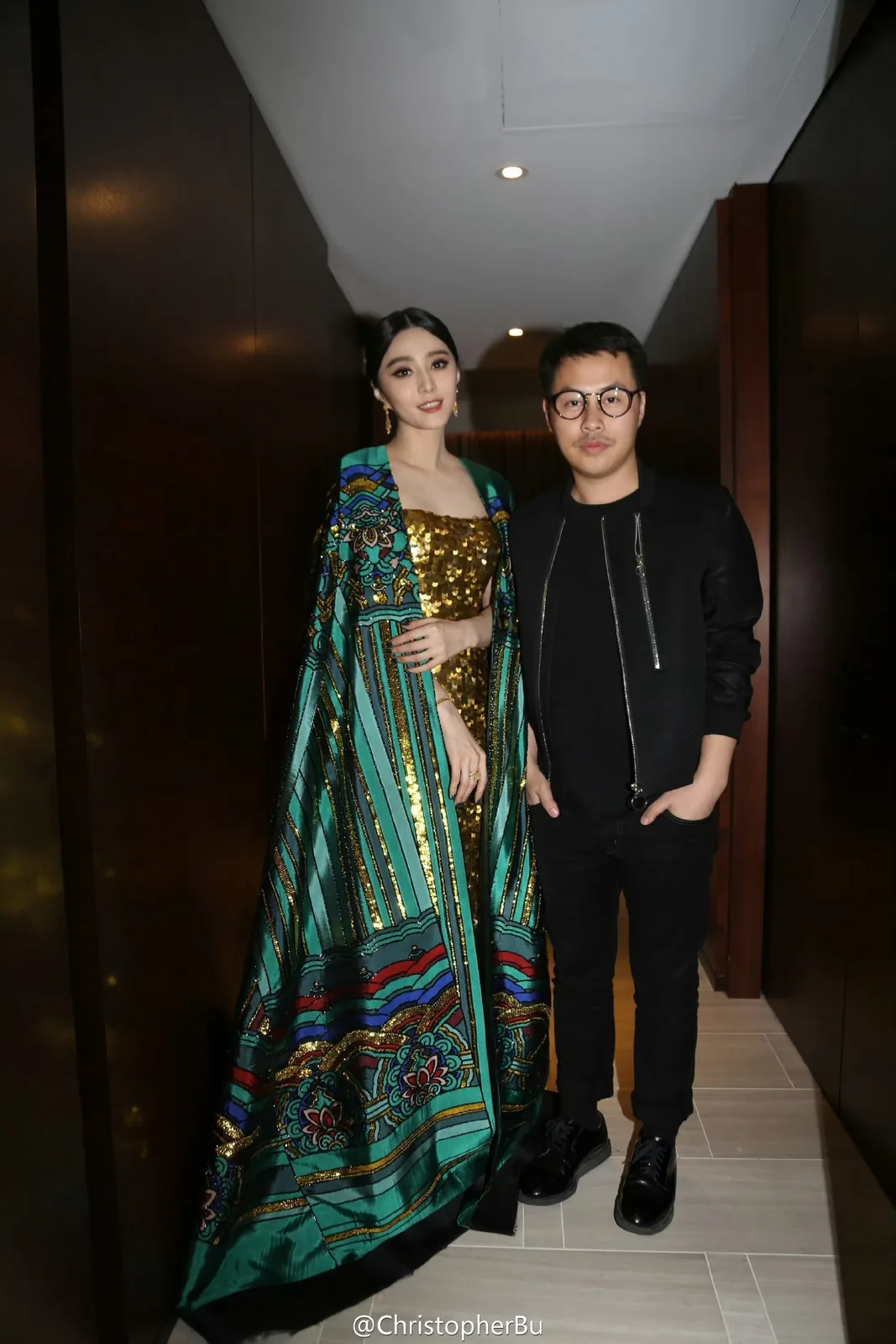
A supplier that publishes where its silk comes from gives a buyer a real record to ask for. A published garment story does not replace the per-order evidence, though. Origin sits in the Entity & verification group of the written quotation, and the document set names a certificate of origin. The site publishes, as a first-party record, that the label's own production records place the silk for the 2013 dupioni pieces, the 2015 Met Gala jacquard gown and the 2018 Oscars dress in Yizhou. That line is the kind of origin documentation a buyer can actually ask to see when checking a supplier's provenance claims.
The published chain names three looks. The mulberry silk woven in Yizhou is the base of the couture gowns Christopher Bu designs. The dupioni cut for Fan Bingbing in 2013 came from this silk base. The jacquard of the Forbidden City gown she wore to the 2015 Met Gala came from the same base. So did the Snow Plum Blossom dress Paz Vega wore to the 2018 Oscars. The label describes these as Christopher Bu product cut from the same dupioni we supply as greige today.
Natural dupion silk yarn is one of four varieties on the spec sheet, offered greige (undyed) or dyed to order. The label says it supplies that same greige dupioni today, the base the site says the 2013 dupioni pieces and the 2015 Met Gala jacquard gown came from. That makes a greige dupioni variety on a spec sheet the cloth behind a named red-carpet gown, so the fields in a compliance check are not abstract. A lot mark, a grading certificate per lot and a certificate of origin are the per-order paper behind that origin claim.
For the specific order, the buyer still needs the per-order documents. Certificate numbers are provided with the written quotation and the shipping documents, and each certificate is read within its listed scope: GOTS, OEKO-TEX STANDARD 100 Class II, China Organic and quality-system files. The buyer verifies the OEKO-TEX label through the OEKO-TEX label check and the GOTS licence through the GOTS public licence database, then confirms destination-market compliance in writing before order approval. The archive story documents where the silk came from. It does not show that this order's certificate is current, that its scope covers these goods, or that this lot's grade follows GB/T 1797-2008.
The site names those three looks for this silk and makes no claim about every gown or every season, and a buyer should not read it that way. Ask to see the origin record as part of a provenance check, then close the order on the per-order documents. The certificate check page lists the public lookups that do the closing work.
Destination-market compliance is a paper check
California Prop 65 and EU textile safety are reviewed against product-specific test reports. Both sides confirm them in writing before order approval. That is a desk check. A mill audit can show a buyer the test bench. The record that matters is the report for the specific product and the destination market. The compliance group on the written quotation is where this review is recorded.
A product-specific test report is the record that ties a compliance claim to one product and one destination market. A general certificate does not replace it. For example, a buyer shipping to the EU asks which report covers a given claim. Then the buyer checks that report against the certificate scope. Both sides confirm the result in writing before order approval, and the buyer files it with the quotation. One report covers one claim; a buyer should not accept a blanket statement in its place.
The trade and shipping terms page sets out the documents that travel with an order. The sample request page covers the swatch and the test method reference that should arrive with the quotation. A buyer who has these in hand before the audit can spend the visit on the floor.
How to run the checklist before you travel
Use one rule: a row closes only when the document named in it exists, and the moment named in it has passed. Ask two questions of each row: what paper satisfies this check, and when must that paper exist. A field with no document and no date is a promise, and the buyer should leave that row open. Write the answers down, one line per field.
Run the method in order. Start with the 5 groups of the written quotation. For each field, name the document that satisfies it and the moment it must exist. Then verify each certificate number through the OEKO-TEX label check and the GOTS public licence database. Record the result. Then check California Prop 65 and EU textile safety against the product-specific test reports. Finally, confirm destination-market compliance in writing before order approval. Work down the table once, in order, and mark each row open or closed.
The methodology is plain: it turns a pile of claims into a page of open and closed rows. Keep the downloadable raw silk spec sheet beside the quotation as you work. Raise any field whose evidence is not obvious with the seller in writing. A field that needs a phone call to explain is a field that should be stated on paper.
Before you approve any raw silk order, request a written quotation and work down the checklist on paper. Raise every open row with the seller in writing before the visit. A quotation that survives all 5 groups is a document a buyer can sign. The audit day can then stay on the floor. Those rows are already closed. Ask for paper first.
Frequently asked questions
Buyers ask the same four questions before a first audit. The frequently asked questions page holds the wider set; these are the ones that change what to check.
Can a mill audit replace the certificate checks?
No. A site visit proves what is physically present. Certificate scope, licence status and destination-market compliance are verified through the public databases and product-specific test reports, then confirmed in writing before order approval. The audit and the paperwork answer different questions.
When does a buyer get the certificate numbers?
With the written quotation and the shipping documents. Those are the documents a buyer checks against the OEKO-TEX label check and the GOTS public licence database. Certification scope is confirmed in writing before order approval, within each document's listed scope.
Which certification scopes can a buyer review?
GOTS, OEKO-TEX STANDARD 100 Class II, China Organic, and quality-system files, each within that document's listed scope, for qualified buyer review. Raw silk grading follows GB/T 1797-2008. A buyer records the scope for the goods on the quotation, not the scope on a brochure.
Is California Prop 65 confirmed at the audit?
No. California Prop 65 and EU textile safety are reviewed against product-specific test reports and confirmed in writing before order approval. The certificate check page lists the public lookups used for this review.
Sources
Each bracketed number in the text points to the source below that backs it.
- [1]
Beijing Qingshanyimu Trading Co., Ltd — Raw silk specs: what every written quotation includes (2026) open
- [2]
Beijing Qingshanyimu Trading Co., Ltd — Certificates: public lookups and certification scope (2026) open
- [3]
Beijing Qingshanyimu Trading Co., Ltd — Raw silk yarn B2B buyer spec sheet (downloadable) (2026) open
- [4]
Standardization Administration of China — GB/T 1797-2008 Raw silk (2008) open
- [5]
OEKO-TEX Association — Label Check: certificate and label number verification (2026) open
- [6]
Global Organic Textile Standard — Public certified-supplier and licence database (2026) open
- [7]
Beijing Qingshanyimu Trading Co., Ltd — Trade terms and shipping documents (2026) open
- [8]
Christopher Bu / Beijing Qingshanyimu Trading Co., Ltd — Yizhou-to-couture production records: the 2013 dupioni pieces, the Forbidden City jacquard gown at the 2015 Met Gala and the Snow Plum Blossom dress at the 2018 Oscars (2013) open
Related: certificate check →
Need a shade card or a quotation?
Greige or dyed to order from a standard shade card, with custom colour matching available. Tell us your fabric, quantity and destination and our B2B team will reply with a tailored quotation.