

20/22D vs 27/29D Raw Silk for Weaving: What Denier Actually Changes in the Cloth
Denier does not grade the silk. It does not describe the finished fabric either. It expresses the fineness of the yarn before the loom. That single decision propagates through the whole cloth. It changes the weight per area, the cover, the drape and the hand. It also changes how the surface receives light. A buyer who selects a denier before defining the fabric has specified a yarn, not a cloth. The trial piece from the loom is where that confusion becomes visible.
This article addresses that decision. It sets out what a denier changes in the cloth, why buyers conflate it with quality grade, and one repeatable method for choosing between 20/22D, 27/29D and 13/19D. It points to the downloadable spec sheet that publishes the denier row. It also checks the argument against the label's published archive, which names the couture garments cut from the same greige dupioni. It closes with one action: state the denier, the grade and the finish in a written quotation, then confirm the selection against a loom swatch.
The buyer situation: a denier gets picked before the cloth
A weaving program normally begins with a fabric specification, not a yarn order. It names a target weight, a hand, a drape and an end use. That end use might be a lightweight scarf, a structured jacket or a lined dress. To source the yarn, the buyer opens a raw silk spec sheet. On the downloadable raw silk spec sheet sits one short denier row: 20/22D is standard, and 13/19D is also in regular supply and 27/29D is available on request. The full row is also published on the raw silk specs page, 2026.
Because the row resembles a menu, buyers treat it as one. A smaller number appears delicate and goes to a lightweight fabric. A bigger number appears strong and goes to a heavy one. The denier is fixed, the order proceeds, and the fabric is woven. Only then does the mismatch appear: the trial piece returns too stiff, too thin, or hanging with the wrong drape.
For example, a buyer planning a crisp, lightweight blouse may order 27/29D. The assumption is that a thicker yarn will be more durable. The resulting fabric comes back heavy and boardy. That forces the sett to be reopened and the trial discarded, delaying the program. The denier was never the problem; choosing it first was.
A quieter version appears when a buyer reads 27/29D as a superior grade and pays a premium. The yarn runs no cleaner on the loom, because grade and denier are separate measurements. Consider how rarely a spec sheet is read top to bottom in one sitting. The commercial lines get read, while the construction logic behind them does not.
One root cause: denier is a yarn input, not a quality grade
One root cause sits behind most of these misses. Buyers treat the denier row as a quality ladder, reading 27/29D as stronger than 20/22D. They also treat the denier as the fabric specification. Neither reading holds. Denier describes the yarn before the loom, grade describes how well that yarn was made, and the fabric is a third thing, built from yarn plus sett, weave and finish.
Denier and grade measure different things
Denier is a measure of the linear mass density of a filament yarn. A higher number means a heavier filament for a given length. Grade is the quality tier assigned to a lot of raw silk. On the published spec, grades run 4A, 5A and 6A, and grading follows GB/T 1797-2008, with moisture controlled below 11% (Standardization Administration of China, 2008). The standard is named on the certificate check page. Grade availability is confirmed by variety in the written quotation (raw silk specs, 2026), so a buyer cannot assume 6A is open on every denier.
Evenness, cleanness and neatness belong to the grade side of the sheet. They describe how evenly the yarn runs and how free it is of defects. Denier says nothing about them; a fine yarn and a coarse yarn can both carry the same grade. A buyer who wants a smooth, even fabric needs the grade fields, not a bigger denier. A warp that breaks on the loom is a preparation problem that a heavier filament will not correct.
What a denier number propagates into the cloth
Denier does not stay in the yarn. It moves into the cloth through a handful of linked effects. These effects are qualitative and hold at a fixed sett and weave.
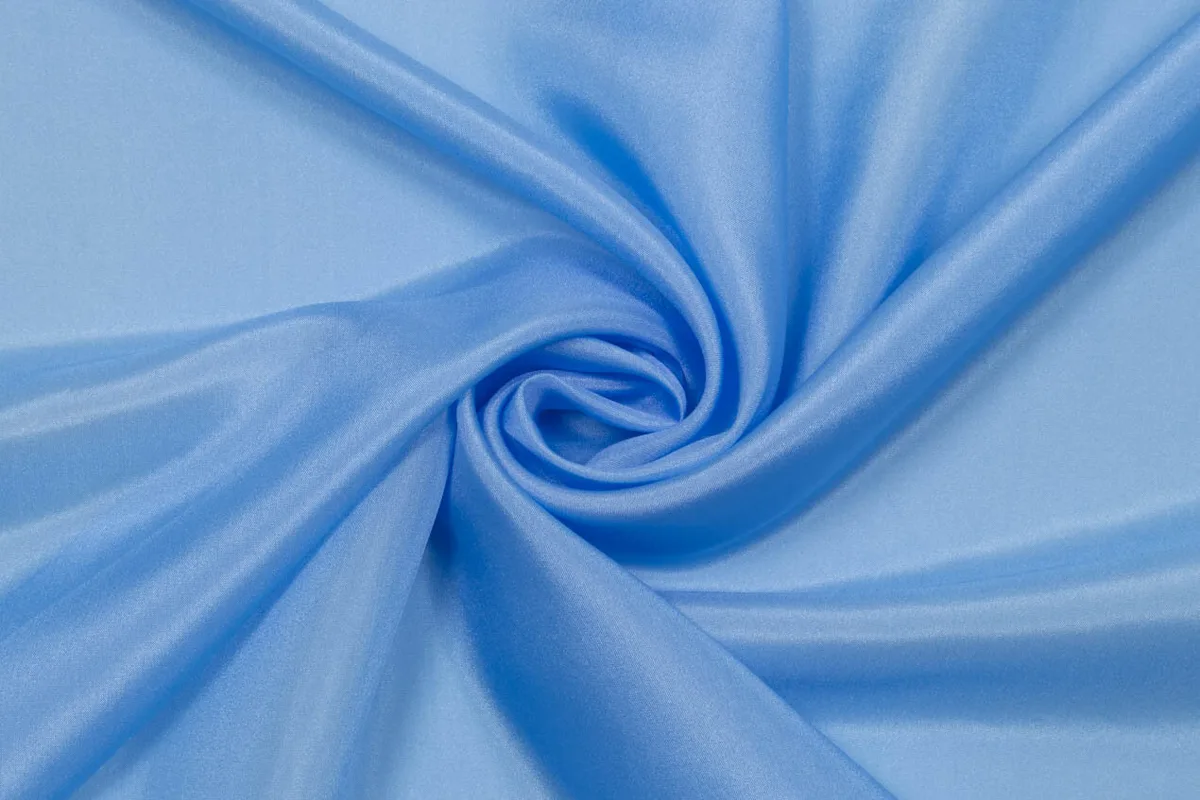
Sett is the number of warp ends and weft picks per unit of width. Keep the sett fixed and a heavier filament fills more of the space between threads. The fabric gains cover and weight, feels fuller, and hangs with more body. A finer filament leaves more air in the same sett. That fabric tends to be lighter, softer and more sheer.
Cover is how fully the yarns hide the space between them. A coarser denier tends to raise cover at a given sett. Hand is the way the fabric feels when you hold it. A heavier filament tends to give a firmer hand, a finer one a softer hand. Drape follows the same line. Lightweight fabric tends to fall in soft folds, while heavy fabric tends to hold a shape.
Surface and colour also respond. A finer, more even yarn can read as smoother and a little brighter. A coarser yarn shows more texture. Dye uptake changes with yarn size and twist, so a shade matched on one denier may not read the same on another. All products here are available greige (undyed) or dyed to order from a standard shade card or a custom colour (product range). Finish is therefore a separate choice from fineness.
None of these effects is a defect; they are consequences. The mistake is expecting a denier swap to leave the fabric unchanged. It is also expecting a bigger number to repair a quality problem, which it will not.
20/22D, 27/29D and 13/19D compared
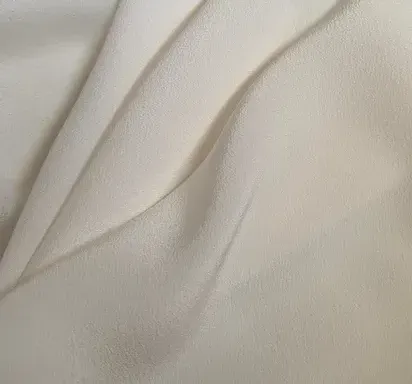
Place the three deniers side by side and the row stops resembling a ladder. Two facts are firm: 20/22D is standard, and 13/19D is also in regular supply and 27/29D is on request. Everything else is a tendency, not a grade. The table below keeps the two kinds of claim apart, and the denier row is published on the raw silk specs page, 2026.
The tendency rows are qualitative design guidance, not measured values. Sett, weave, finish and grade also shape the final fabric. Treat the table as a starting map and confirm the result with a swatch.
On request means the denier is not the standing stock line. It is made available for a program and fixed in the written quotation. Standard means 20/22D is the default listed on the spec sheet. Neither word carries a quality ranking.
One more distinction matters. The table compares deniers of mulberry raw silk yarn (filature silk) from Bombyx mori, mulberry-fed. A 1-ply luxury silk yarn at 20D in 5 kg bundles is a separate variety on the product range, not a fourth point on the denier row. Packing also differs by product. Export cartons or bales run 60 kg per bale typical, while the luxury yarn comes in 5 kg bundles. Those are shipping facts, not fabric behaviour.
| Attribute | 20/22D | 27/29D | 13/19D |
|---|---|---|---|
| Availability | Standard | On request | On request |
| Filament character | Mid range | Coarser, heavier | Finer, lighter |
| Cloth tendency at a fixed sett | Balanced body and drape | More weight, cover and firmness | Lighter, softer, more sheer |
| Typical end use | General weaving, broad use | Structured or fuller cloths | Light, fine cloths |
| Grade availability | Confirmed by variety in the quotation | Confirmed by variety in the quotation | Confirmed by variety in the quotation |
| Finish | Greige or dyed to order | Greige or dyed to order | Greige or dyed to order |
| Where it is fixed | Written quotation | Written quotation | Written quotation |
What a denier choice looks like on a body
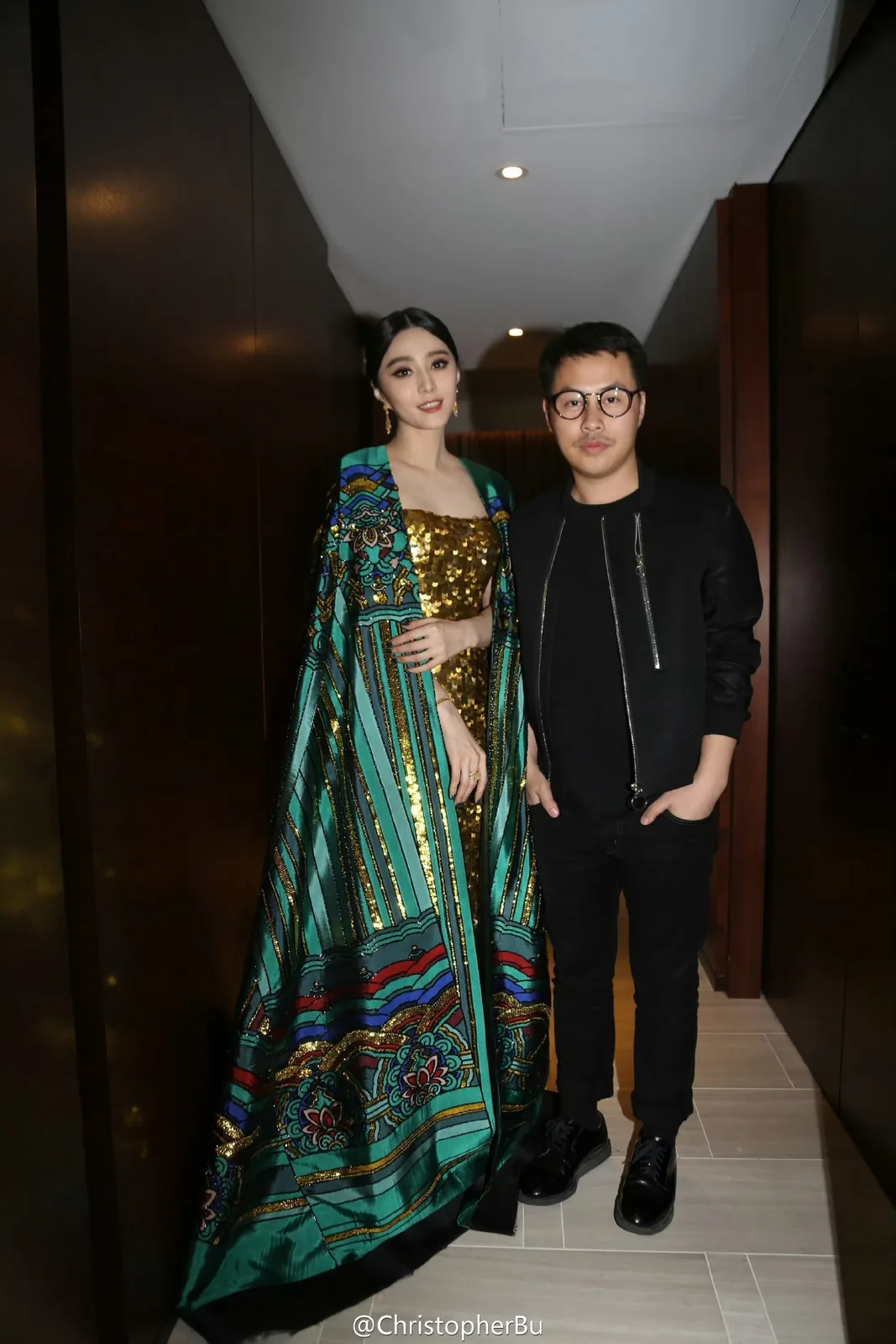
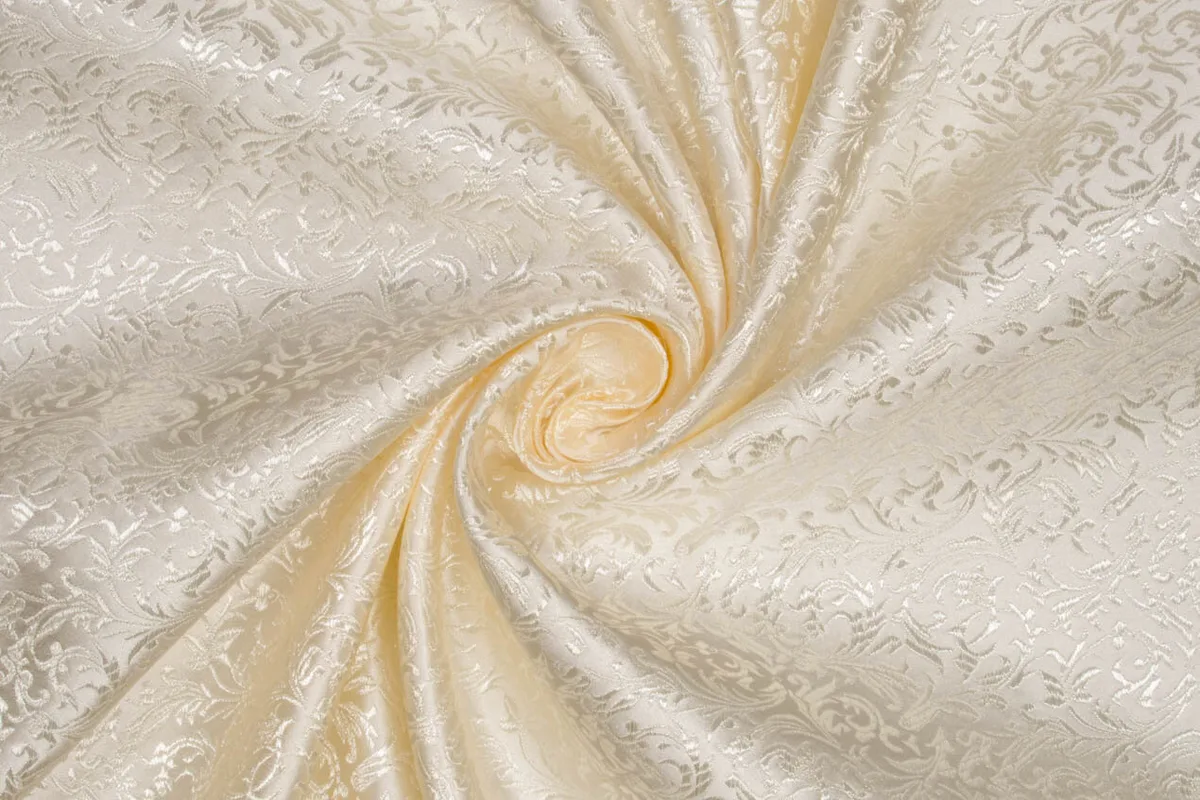
A spec sheet stays abstract until a cloth is cut. The site's own archive closes that gap, because it names the garments cut from the same silk the B2B sheet lists as greige. The site states that the mulberry silk woven in Yizhou is the base of the couture gowns Christopher Bu designs. It also states that the label's own production records place the silk for these gowns in Yizhou, an entry tagged as a first-party record in the site blog library. The named pieces are narrow: the dupioni cut for Fan Bingbing in 2013, the jacquard of the Forbidden City gown she wore to the 2015 Met Gala, and the Snow Plum Blossom dress Paz Vega wore to the 2018 Oscars. The site does not claim that every gown, every collection or every ready-to-wear season used this silk.
The 2013 pieces carry the clearest denier argument. The site describes a stamp-printed dupioni umbrella skirt photographed in Paris and a spring/summer 2013 plaid ensemble worn to the Skiptrace press conference in Cannes. It says both appear again on the label's own lookbook models, which confirms them as Christopher Bu product cut from the same dupioni supplied as greige today. Stamp-printed refers only to those finished archive garments. The B2B finish choice stays greige (undyed) or dyed to order from a standard shade card or a custom colour, both available on all products (raw silk specs, 2026). The spec sheet says of printing, verbatim, "Printed options are not listed in this specification."
The denier row on the downloadable spec sheet fixes 20/22D as standard and lists 13/19D also in regular supply and 27/29D on request. The spec sheet FAQ keeps denier and momme apart: denier measures yarn weight, and momme measures woven cloth weight. The site's dupioni case study states that "a 19 momme dupioni skirt holds its A-line instead of collapsing, because the slubbed weave resists the drape that flattens a crepe" (site blog library). Together these facts show what a weight choice does once a cloth is cut. A buyer who picks 20/22D or asks for 27/29D is choosing, in tendency, between a finer filament that gives a lighter, softer cloth and a coarser one that gives more body and cover. The archive shows the consequence in the named garments: those 2013 Fan Bingbing dupioni pieces hold a shape, and the case study records a 19 momme skirt holding an A-line where a flat crepe would fall. The site gives no denier for those gowns, so the shape is attributable to the weight and the weave it does name. A denier value on paper predicts that behaviour, and the trial swatch is where a buyer tests it.
The chain extends past dupioni. The site says the jacquard of the Forbidden City gown came from the same silk base, with the motif woven into the cloth on the loom. It also names the Snow Plum Blossom dress Paz Vega wore to the 2018 Oscars in the same production record. Dupioni, jacquard and hand embroidery are three different crafts, and the site attributes them to one reeling and grading origin. For a buyer, that matches the denier row: name the input, then confirm what the loom produced. Sourcing stays with local mills, and Yizhou is the geographic origin the site publishes. The site's blog archive carries that provenance in the site's own words.

A judgement method: work backwards from the cloth
One method turns the denier row into a decision. Start with the fabric, name the construction, then choose the denier that serves it and test the result. The methodology is plain, it has four steps, and the aim is a repeatable choice rather than a lucky one.
Name the target cloth first
Write down the target in plain terms: weight, cover, drape, hand and end use. Do not write a denier yet. A buyer who starts from "light, soft, semi-sheer" has a testable specification. A buyer who starts from "20/22D" has only a yarn. The specification is what the swatch gets judged against, so it has to exist before the yarn is ordered.
Pick the denier that fits, then hold the rest still
Map the target onto the denier tendencies. A light, soft fabric points toward the finer end, a full fabric toward the coarser end, and a general fabric toward 20/22D. Then fix the sett, weave and finish for the trial. Change one variable at a time, because if denier and sett move together, a bad result tells you nothing about either.
Read denier together with grade, never alone
For the target fabric, ask for the grade fields as well. Evenness, cleanness and neatness decide how cleanly the yarn runs on the loom, while denier decides how heavy the filament is. A buyer needs both, and grading follows GB/T 1797-2008, named on the certificate check page. A fine denier with a low grade still gives an irregular fabric. A coarse denier with a high grade still gives a heavy one.
Confirm availability and the paperwork in writing
13/19D is also in regular supply and 27/29D is on request. Grade availability is confirmed by variety in the quotation. So the denier and the grade have to be stated together, in writing, before approval. The raw silk spec page publishes the field list for that quotation. A phone call is not a specification.
For instance, a mill trial of one denier at one sett gives a clean answer. A trial that changes three things at once gives an argument. Keep the swatch, the sett note and the result together. The sample request page covers the swatch that should arrive with a quotation.
What the written quotation must lock
The written quotation is where the choice becomes binding. It carries a five-group acceptance framework. One group covers commercial and shipping fields, one covers per-batch quality evidence, and one covers samples and testing. Denier, grade and finish belong in that document, stated per variety rather than left to a phone call.
The spec sheet lists denier, grade and finish as planning values. The written quotation fixes the final spec, the MOQ and the schedule for one order (trade terms, 2026). A buyer comparing a planning value with a final value will find a gap that is not really there. The two documents answer different questions. The raw silk spec sheet is the planning reference, and the quotation is the contract.
Grade claims on that quotation should be checkable. Certificate numbers come with the written quotation and shipping documents. So a buyer can fact check each scope against the public databases before approval. The OEKO-TEX label check and the GOTS public licence database let a buyer confirm a scope before approval (OEKO-TEX Association; Global Organic Textile Standard, retrieved 2026-11-06). Raw silk grading follows GB/T 1797-2008. None of this belongs to the denier choice, but it belongs to the same order: one claim, one document, one written confirmation.
The method also protects against a common slip. A buyer who locks only the denier can still receive a grade or a finish that was never agreed. State all three on one line, then read the five groups against the published field list before signing. Ask for paper first.
Validate the choice on the loom before you approve
There is one action that closes the loop. Put the chosen denier on the loom at the target sett and weave a swatch. Compare that swatch to the specification, not to the spec sheet. The spec sheet tells you what you ordered; the fabric tells you what you got.
Samples ship by DHL worldwide or a designated courier. A swatch or sample with the quotation is one of the stated fields (raw silk specs, 2026). Lead time is 15-25 working days for eligible regular bulk orders after sample, specification, deposit and material availability are confirmed. The binding schedule sits in the signed order documents (trade terms, 2026). Bulk payment is T/T with a deposit against the Bill of Lading, and the exact HS subheading is confirmed in the written quotation rather than fixed for every order. Those commercial lines are settled on paper, in the same quotation that carries the denier.
The specific action is simple: request a written quotation that names the denier, the grade by variety and the finish on one line. Then run the trial swatch on the loom you plan to use before you approve. One document, one swatch, one decision. A denier choice that survives the swatch is a choice a buyer can sign.
Is 27/29D higher quality than 20/22D?
No. Denier measures fineness, not quality, so a 27/29D yarn is coarser but not better or worse. Quality sits in the grade (4A, 5A, 6A) and the per-lot evidence under GB/T 1797-2008. A buyer who wants a cleaner-running yarn should look at evenness, cleanness and neatness, not the denier number.
Can I get 13/19D or 27/29D in any grade?
No. 13/19D is also in regular supply and 27/29D is available on request, and grade availability is confirmed by variety in the written quotation. Ask for the grade and the denier together. The written quotation is where both are stated for one order, and it is the only place that fixes them.
Does a heavier denier always make a heavier cloth?
Not always. At a fixed sett and weave, a coarser filament tends to add weight and cover. But a buyer can open the sett or change the weave and offset it. The fabric is the result of denier plus construction, not denier alone. That is why the trial swatch, not the spec sheet, has the final word.
Are greige and dyed-to-order finishes available across the range?
Yes. All products are available greige (undyed) or dyed to order from a standard shade card or a custom colour (product range). Finish is a separate choice from fineness. A buyer can hold one denier and change only the finish for a second trial, which is a clean way to evaluate a shade.
Sources
Each bracketed number in the text points to the source below that backs it.
- [1]
Beijing Qingshanyimu Trading Co., Ltd — Raw Silk Yarn 20/22D: B2B Buyer Spec Sheet (2026) open
- [2]
Beijing Qingshanyimu Trading Co., Ltd — Raw silk specs: what every written quotation includes (2026) open
- [3]
Standardization Administration of China — GB/T 1797-2008 Raw silk (2008) open
- [4]
OEKO-TEX Association — Label Check: certificate and label number verification (2026) open
- [5]
Global Organic Textile Standard — Public certified-supplier and licence database (2026) open
- [6]
Beijing Qingshanyimu Trading Co., Ltd — Site blog library: Yizhou-to-couture production records, the 2013 dupioni case study, and the couture, about and home page provenance statements (2013) open
Related: raw silk denier table →
Need a shade card or a quotation?
Greige or dyed to order from a standard shade card, with custom colour matching available. Tell us your fabric, quantity and destination and our B2B team will reply with a tailored quotation.